Taipei for History Buffs: 12 Best Places to Learn About Taiwanese History
Have you ever wondered what shaped Taiwan into the vibrant, modern nation it is today?
If you’re visiting Taipei and want to learn about Taiwan’s history, this article lists 12 must-visit places highlighting the island’s rich and complex past.
Hi, I’m Grace, born and raised in Taipei, and then I moved abroad as a teenager. I go back often to visit family, and each trip gives me a chance to see my hometown from a new perspective.
I like to explore familiar places with fresh eyes and learn more about Taiwan’s history along the way. Over the years, I’ve discovered many fascinating spots, and I’m excited to share some of my favorite historical attractions with you.
Ready to uncover the stories behind Taipei’s most historic sites? Let’s get started!
12 Must-Visit Places To Learn About Taiwan’s History
National Palace Museum (故宮博物院)
- Google Maps: National Palace Museum
- Why visit: To see one of the world’s largest and most important collections of Chinese art and imperial treasures.
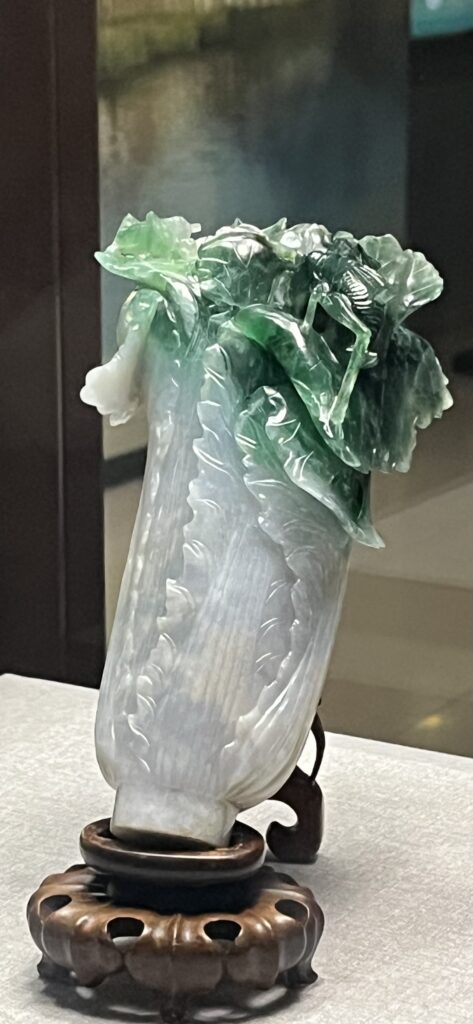

You might be wondering why the world’s greatest collection of Chinese imperial artifacts is in Taipei, not in Beijing’s Forbidden City. Here is why:
During the Chinese Civil War in the 1940’s, as the Communists and Nationalists battled for control of China, the Nationalist government (KMT) packed up thousands of artifacts from the Forbidden City and transported them across the sea to Taiwan.
These artifacts became the foundation of the National Palace Museum, which today houses over 700,000 pieces spanning thousands of years of Chinese history.
I’ve visited the National Palace Museum many times over the years, and it has changed a lot to become more engaging for visitors. The museum now uses digital technology to bring the details of some of the most famous paintings to life through interactive displays and projections.
Exhibitions are curated in a more interesting way, and the self-guided audio tours make it easier to understand the artifacts. Even the gift shop has improved, offering fun and creative souvenirs that appeal to younger visitors.
I have a stand-alone article about the National Palace Museum, which includes how to get there and what to see there. Please check it out if you are interested in learning more.
Chiang Kai-Shek Memorial (中正紀念堂)
- Google Maps: CKS Memorial Hall
- Why visit: To learn about Taiwan’s modern political history and the life of one of its most influential leaders.
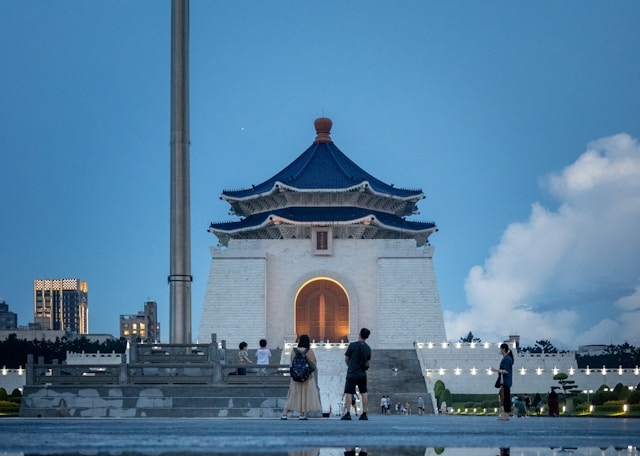
Chiang Kai-shek, the former leader of the Republic of China, played a crucial role in shaping modern Taiwan. After losing the Chinese Civil War to the Communists, he and his government retreated to Taiwan in 1949, ruling under martial law for nearly four decades.
His legacy remains controversial. Some view him as the leader who preserved Taiwan’s independence, while others remember the White Terror era, a period of political suppression under his rule.
Inside, you’ll find a huge bronze statue of Chiang Kai-shek, seated in a grand hall. Downstairs, you can visit the museum to learn more about Chiang’s life and legacy. You’ll see his personal items, military uniforms, and his official black limousine. The exhibits also show Taiwan’s journey from authoritarian rule to democracy.
I have an in-depth article about CKS Memorial, if you are interested in learning more.
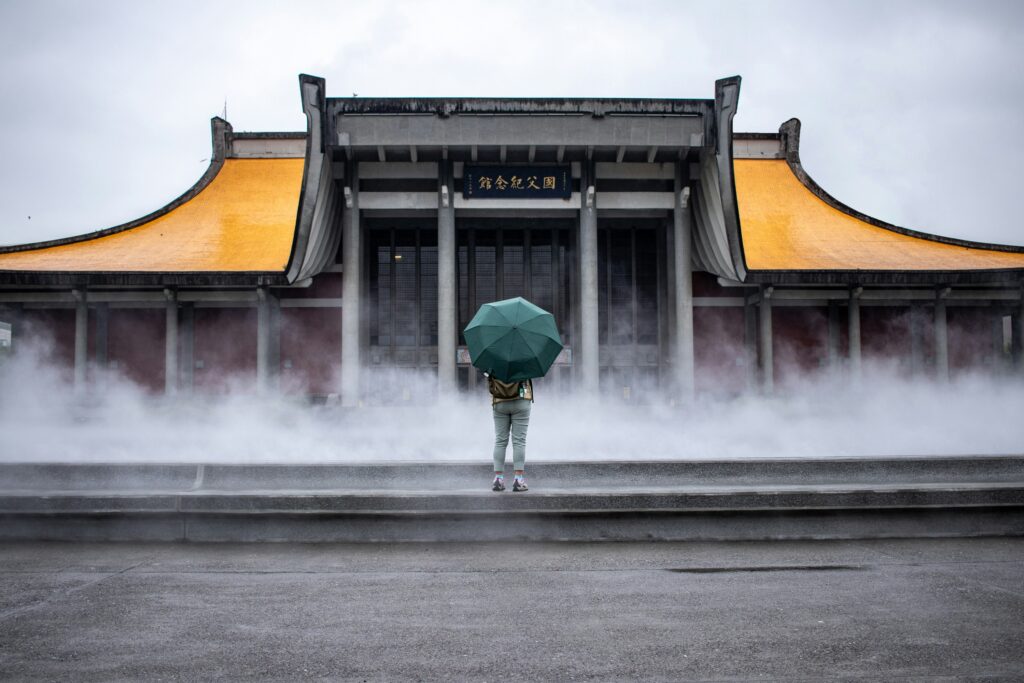
Dr. Sun Yat-Sen Memorial (國父紀念館)
(Please note that the indoor portion of the memorial is currently undergoing a renovation and will reopen in 2026. The outdoor areas and gardens remain open)
- Google Maps: National Dr. Sun Yat-Sen Memorial Hall
- Why visit: To learn about the man who helped shape modern China and Taiwan.
Known as the “Father of the Republic of China,” Sun Yat-sen was the leader who overthrew the Qing Dynasty in 1911 and established China’s first republic. While he never ruled Taiwan, his ideas and legacy played a major role in shaping Taiwan’s political identity.
The memorial hall was built in 1972 as a tribute to Sun Yat-sen’s contributions. Inside, you’ll find a giant bronze statue of him, with an hourly changing of the guard ceremony.
The exhibition rooms feature displays on his life, revolutionary movements, and the founding of the Republic of China.
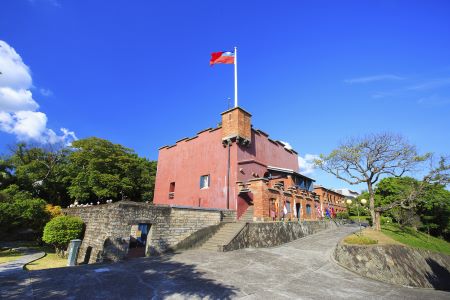
Fort San Domingo (紅毛城)
- Google Maps: Fort San Domingo
- Why visit: To explore Taiwan’s colonial history and enjoy one of the best river views in Tamsui.
In the 17th century, Taiwan began to appear on European maps as a strategic island for trade and military power in East Asia. Located in Tamsui, Fort San Domingo was first built by the Spanish in 1644 and later taken over by the Dutch, Qing, and British.
Today, the red-brick fortress and the nearby British Consulate have both been turned into museums. Inside, you can see old furniture, maps, and artifacts that tell stories of how Taiwan once connected with the rest of the world.
I have a standalone post about how to spend a day in Tamsui, if you are interested.
Dihua Street (迪化街)
- Google Maps: Dadaocheng Visitor Center
- Why visit: To experience Taipei’s best-preserved historic district and see how trade shaped the city’s early growth.
Located in the Dadaocheng area (大稻埕), Dihua Street has been a major commercial hub since the 19th Century, and you can still see many of its original features and historic character today.

As you stroll down the street, you’ll see a unique mix of Fujian-style townhouses (閩式建築) and Baroque-style facades from the Japanese period.
Many of these old storefronts are still in use today. Some are “100-Year-Old” (百年老店) traditional shops selling tea, herbs, dried goods, and fabrics, and others have been converted into modern cafés, art spaces, and boutique shops.
If you want to learn more about this place, I have a stand-alone post about Dadaocheng and Dihua Street.
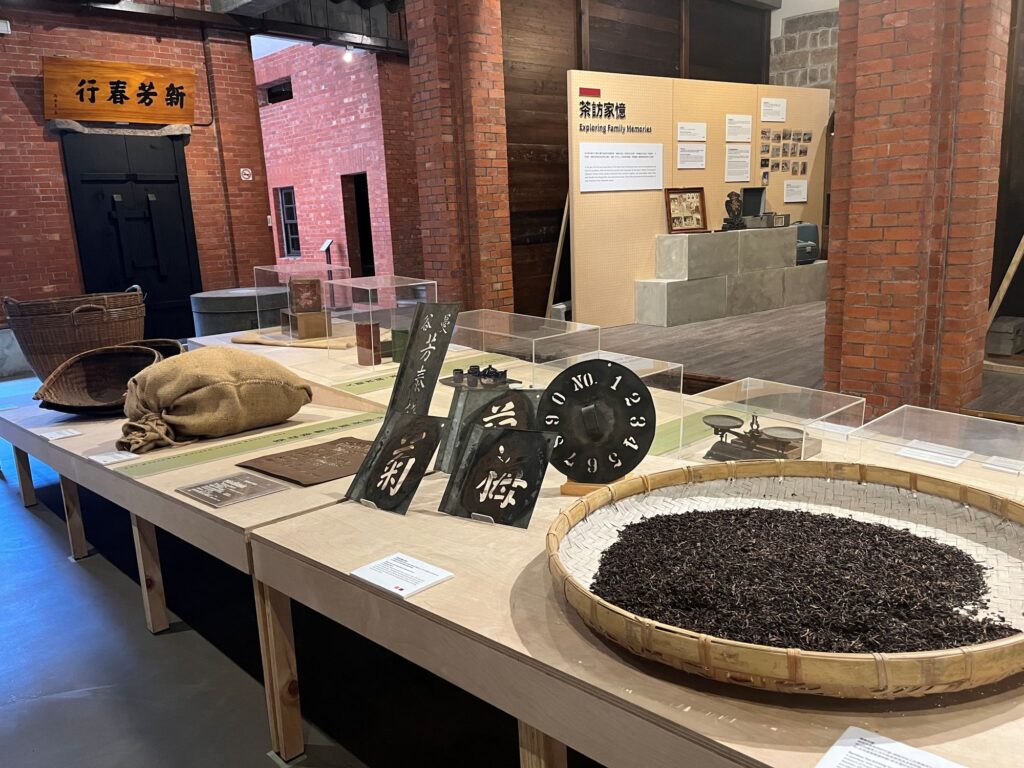
Sin Hong Choon Tea Museum (新芳春茶行)
- Google Maps: Sin Hong Choon
- Why visit: To learn how tea shaped Taipei’s early economy and culture.
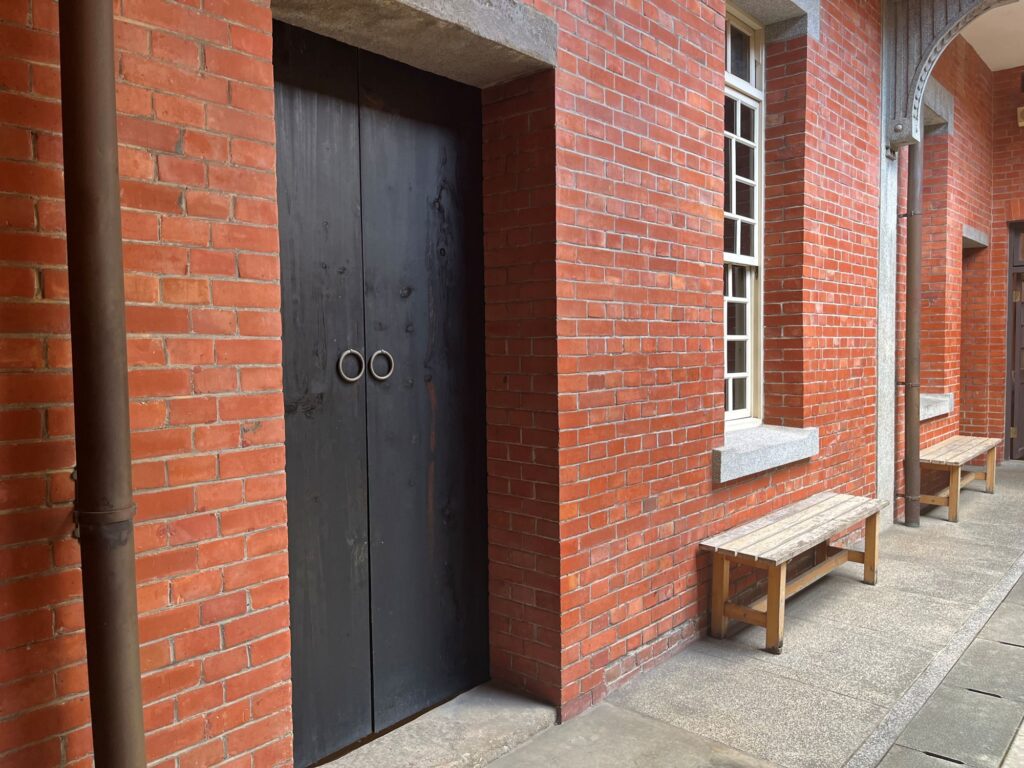
Just a short walk from Dihua Street, Sin Hong Choon Tea House is a beautifully restored tea factory from the 1930s.
The building is designed in the traditional san-jin (三進) style, which means it has three connected courtyards from front to back. You can see a mix of red-brick walls, arched windows, and wooden beams that reflect both Fujian and Western influences common in Dadaocheng at the time.
Inside, you’ll find displays about how tea trading helped the neighborhood grow into one of Taipei’s busiest commercial areas during the Japanese period.
Taiwan New Cultural Movement Memorial Hall (台灣新文化運動紀念館)
Also in the Dihua Street area, this museum is restored from an old police station. It focuses on the cultural and political awakening that took place in the early 20th century during the Japanese colonial period (see it on Google Maps).
National Taiwan Museum (台灣博物館)
The main branch of the National Taiwan Museum (Google Maps) is a great place to get a feel for Taiwan’s early history. The building itself is already worth a visit—it’s a beautiful neoclassical structure from the Japanese era that stands out in the middle of the city.
Inside, you’ll find exhibits on Taiwan’s natural environment, indigenous cultures, and how the island developed over time.
It’s not a huge museum, so you won’t feel overwhelmed, but there’s plenty to see and learn. If you’re already in the area or planning to visit 228 Peace Park next door, it’s an easy and worthwhile stop to add to your itinerary.
Lin An Tai Historical House (林安泰古厝民俗文物館)
This beautifully preserved Fujian-style residence was originally built in 1783 by Lin Chin-Ming (林欽明), a successful merchant whose family immigrated from Zhangzhou, China.
The Lin family was deeply involved in trade and farming, and their home reflected both their wealth and traditional Chinese values.
Originally in another location in Taipei, the house was carefully relocated and rebuilt in this current location (see it on Google Maps) in the 1980s to preserve it.
Bopiliao Historic Block (剝皮寮歷史街區)
- Google Maps: Bopiliao Historical Block
- Why visit: To walk through a quiet street that captures Taipei’s past from the Qing dynasty to the early 1900s.
Located in Wanhua District, this quiet, cobbled street is one of the few places in the city where you can still walk through buildings that date back to the Qing Dynasty. If you plan a visit to the famous Longshan Temple (龍山寺), don’t forget to stop by Bopiliao, which is just around the corner.
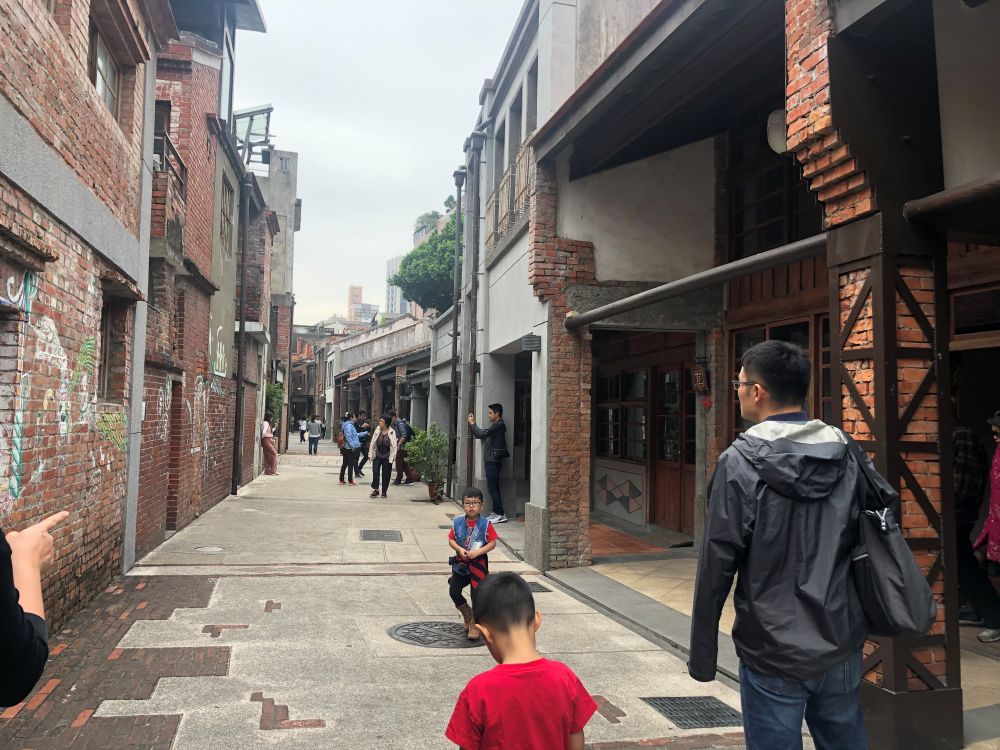
It’s not a big site, but it’s full of thoughtful details that bring the past to life. As you wander the alleyways, you’ll notice a unique mix of Qing-style homes, Japanese-era architecture, and early 20th-century shopfronts, all beautifully preserved and restored.
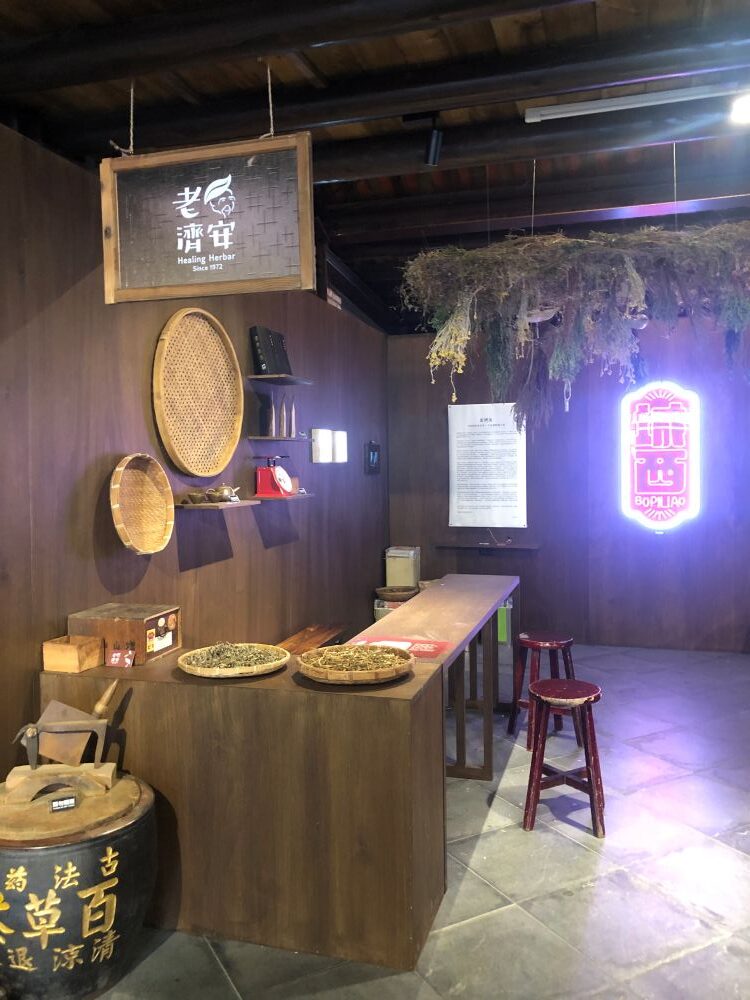
Inside the restored structures, you’ll find interactive exhibits and displays that walk you through the city’s development, from early trade and education to urban growth and cultural change.
Huashan 1914 Creative Park (華山1914)
- Google Maps: Huashan 1914 Creative Park
- Why visit: This is a great place to learn about Taiwan’s industrial history.
Established in 1914, this was originally a sake brewery during the Japanese colonial era. Back then, it played a crucial role in producing rice wine and sake for both local consumption and export.
As you walk through the park, you’ll see art galleries, performance spaces, and creative venues that were once the original warehouse buildings and brick structures—now thoughtfully preserved and given new life.
I have an in-depth post about Huashan 1914 if you’re interested in learning more.
Songshan Cultural And Creative Park (松山文創園區)
- Google Maps: Songshan Cultural and Creative Park
- Why visit: To see another example of how Taipei preserves its industrial heritage and turns it into creative space.
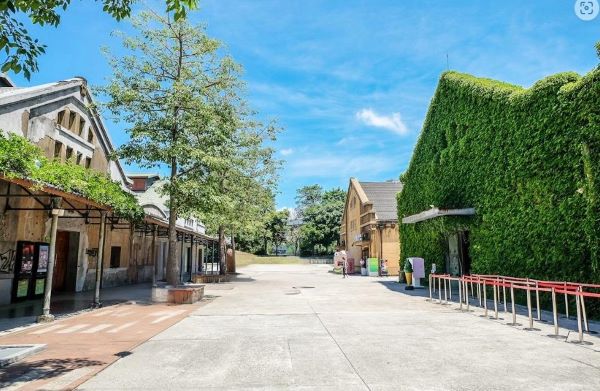
Similar to Huashan 1914, this is a historic industrial site that has been transformed into a major hub for design, art, and innovation.
Originally built in 1937 during the Japanese colonial period, this site was once the Songshan Tobacco Factory (松山菸廠), producing cigarettes for decades before it was decommissioned and then transformed as a creative space.
You’ll walk through well-preserved factory buildings, warehouses, and brick corridors that still carry the character of the past. Many of the original structures have been converted into exhibition halls, design shops, bookstores, and event spaces.
It’s a great place to see how Taipei blends its industrial past with its artistic future. I have an in-depth post about Songshan Cultural and Creative Park.
Final Thoughts
Taiwan has a rich and complex history, and you can learn a lot just by visiting a few places around Taipei. Some spots focus on political figures and key moments, while others highlight trade, daily life, or cultural changes over time.
To recap, here are the 12 places mentioned above:
You don’t have to be a history expert to enjoy these places. If you’re curious about how Taiwan became the way it is today, these sites are a great place to start.
I hope this list helps you plan your trip!