Four Four South Village: A Hidden Historic Spot Near Taipei 101 (四四南村)
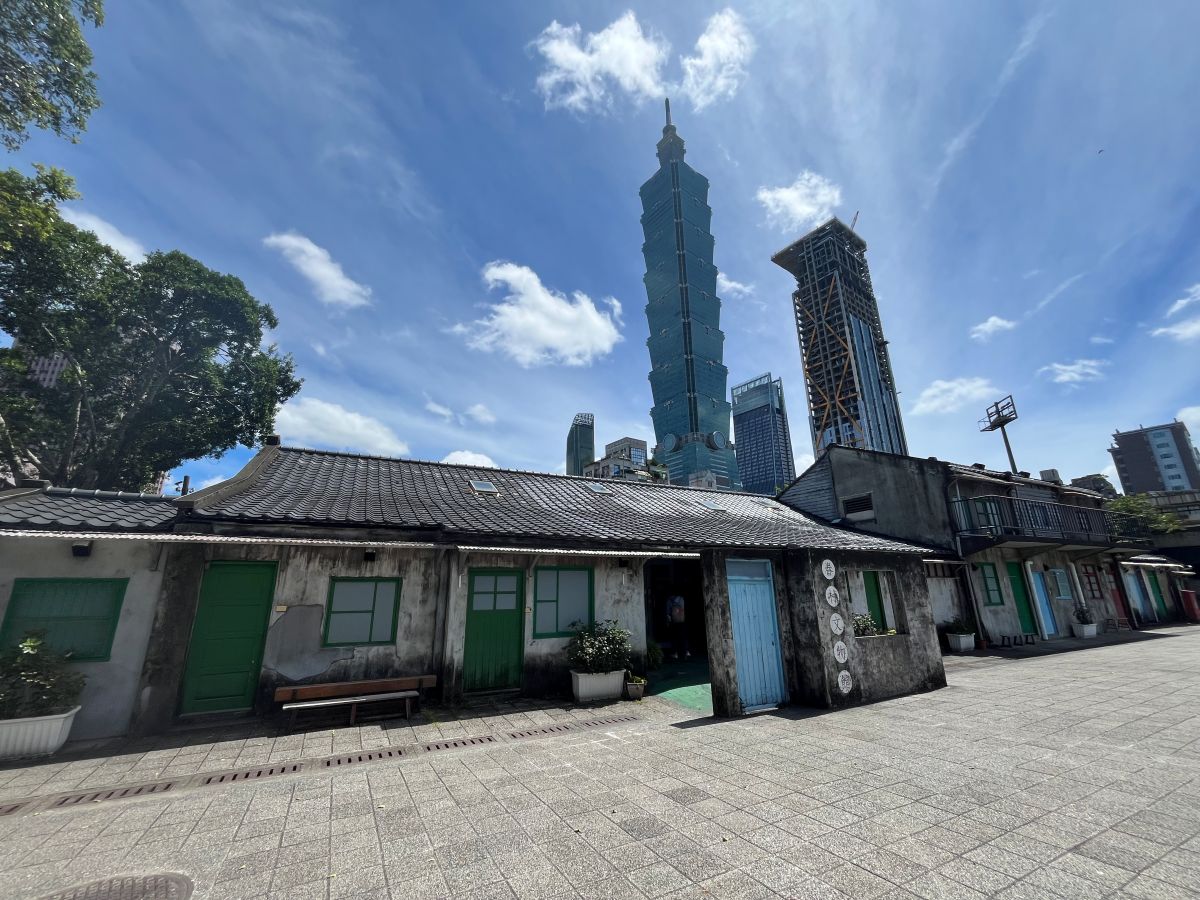
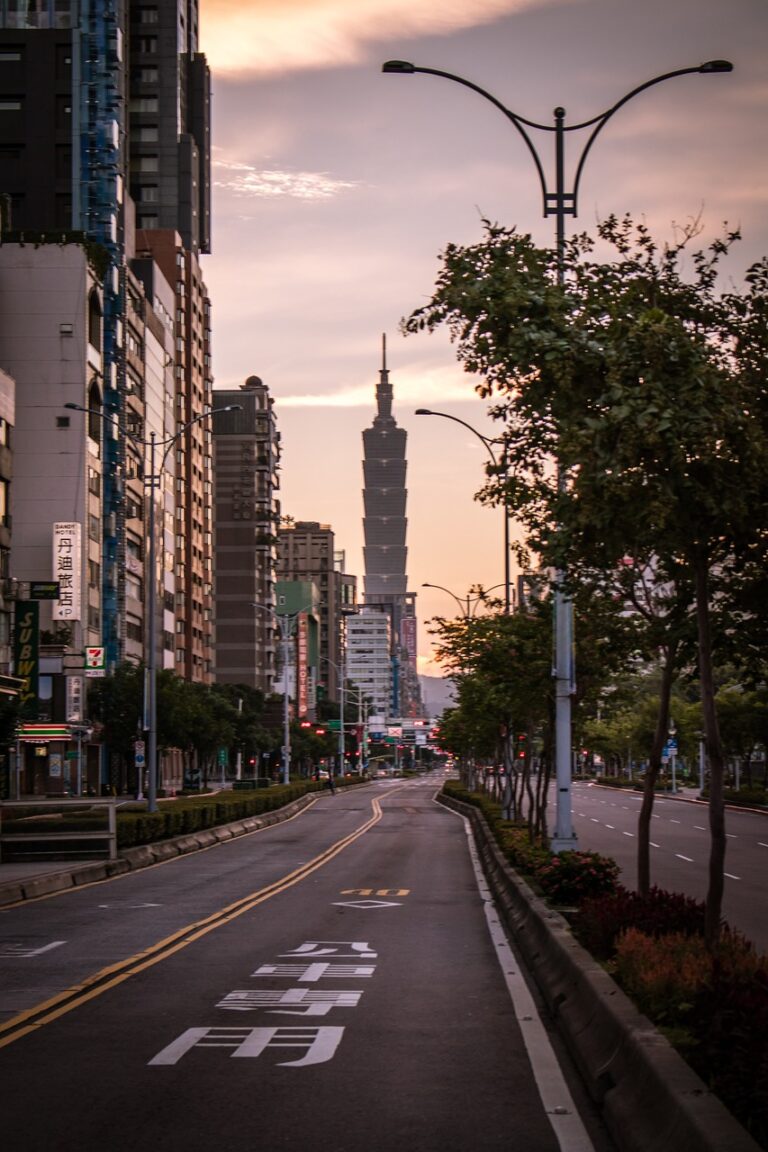
If you are planning to visit Taipei 101, there is a small spot just a short walk away that is worth stopping by.
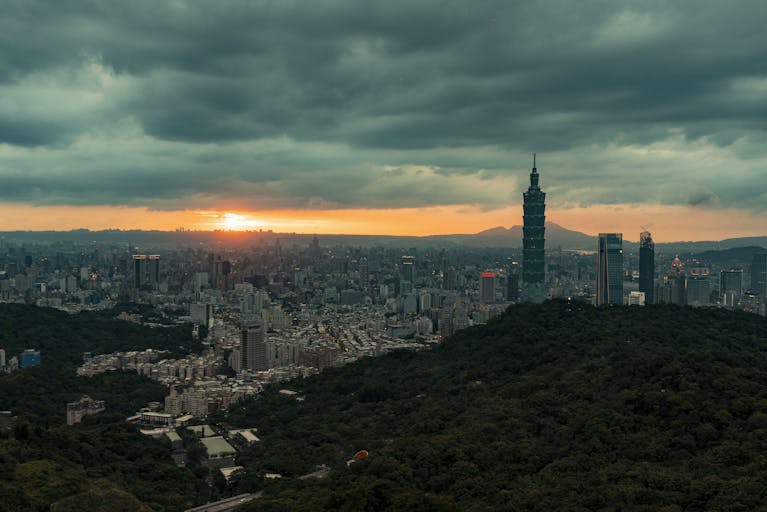
Four Four South Village (四四南村) offers a completely different side of the city compared to the skyscrapers in Xinyi District. Once a military dependents’ village (眷村), it has been preserved as a cultural space with old houses, a café, and small exhibitions.
It doesn’t take long to walk through, but it’s a nice stop to experience a bit of Taiwanese history and take unique photos before heading into the busy Taipei 101 area.
Hi, I’m Grace. I was born and raised in Taiwan and now live in the United States. I return to my hometown of Taipei regularly to reconnect with family and friends.
I visited Four Four South Village on a hot summer morning in 2025, and even under the bright sun, the quiet lanes and old houses felt calm and inviting. It was a nice contrast to the busy streets just a few minutes away.
In this post, I’ll show you what to see at Four Four South Village and share a bit of background so the visit feels more meaningful.
Visiting Four Four South Village In Taipei (四四南村)
How to Get There
This is the link to this place on Google Maps: Four Four South Village
If you’re taking the MRT, get off at Taipei 101/World Trade Center Station on the Red Line and use Exit 2.
Once you’re above ground, walk straight and turn left at the intersection onto Zhuangjing Road (莊敬路). Then take the first left onto Songqin Street (松勤街). The village will be right in front of you.
The walk from the MRT station takes about 5 minutes.
What Is a Military Dependents’ Village(眷村)?
To understand Four Four South Village, it helps to know a little bit about Taiwan’s history.
After the Chinese Civil War in 1949, the ROC government moved to Taiwan and brought along nearly 2 million soldiers, government employees, and their families. The housing communities built for them were known as military dependents’ villages (眷村).
These villages were in many parts of Taiwan, especially near military bases in cities like Taipei, Hsinchu, Taichung, and Kaohsiung.
Most families originally thought they would only stay temporarily before returning to China. As the years passed, it became clear that going back was no longer possible.
Life here was modest. Families lived in small houses, neighbors shared narrow alleys, small courtyards, and relied on one another in every day life. The close-knit communities became an important part of Taiwan’s post-war culture.
Today, most of these villages have been torn down and replaced by modern buildings, and only a few, such as Four Four South Village, have been preserved.
A Brief History of Four Four South Village
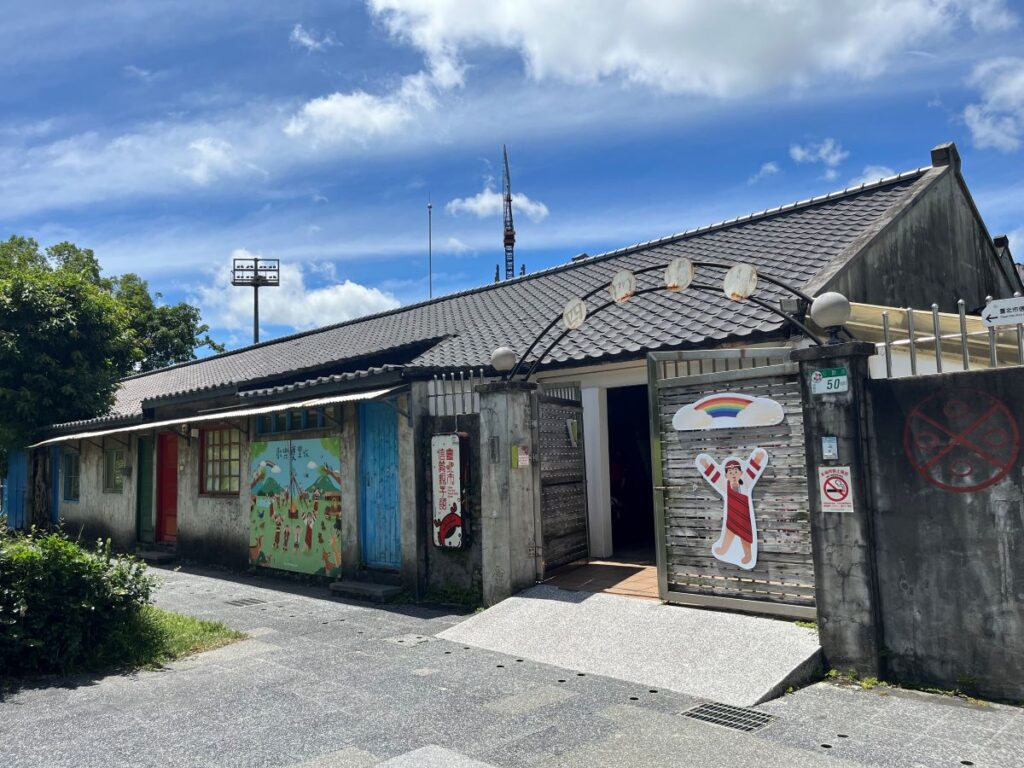
The families who lived in Four Four South Village were connected to the 44th Arsenal, a military factory originally based in Qingdao, China.
When the Nationalist government moved to Taiwan in 1949, the factory was relocated to Taipei and set up in what had previously been a Japanese military warehouse in the Xinyi area.
The village was built just south of the factory, which is how it got its name.
The men worked at the 44th Arsenal making weapons, ammunition, and other military supplies. It was a dangerous job, as handling gunpowder and explosives meant that accidents could occur at any time.
As Taipei developed, most of the village was eventually torn down. What remains today is a small preserved section that gives you a glimpse into what life used to be like here.
What to See In Four Four South Village
The Old Houses
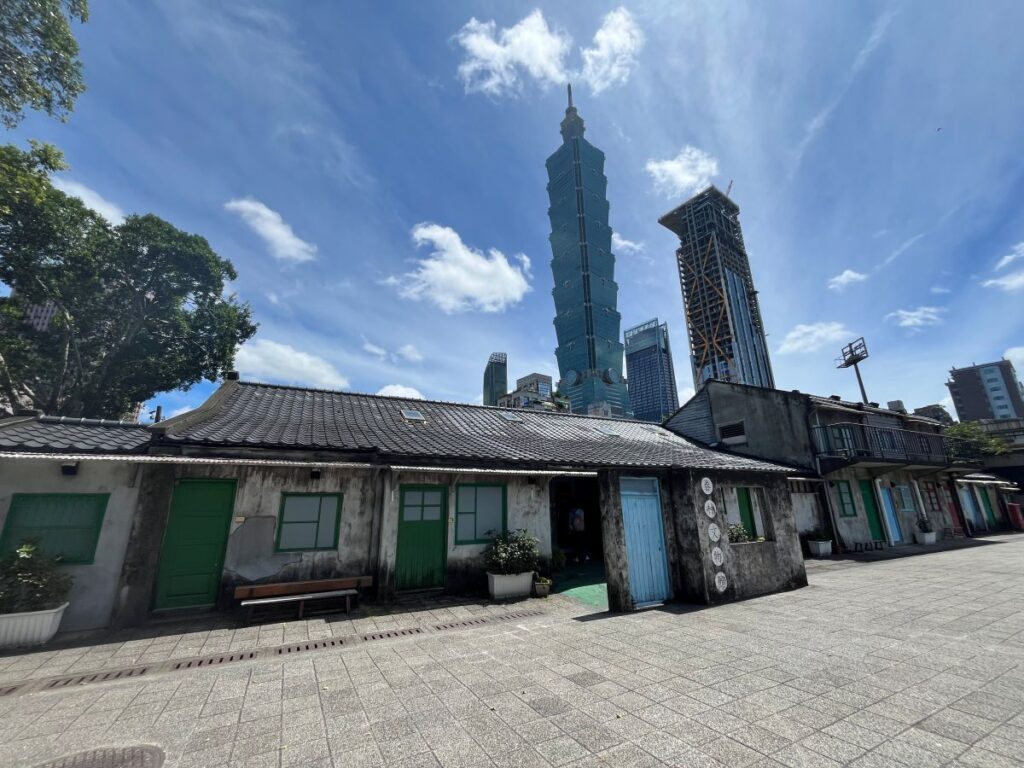
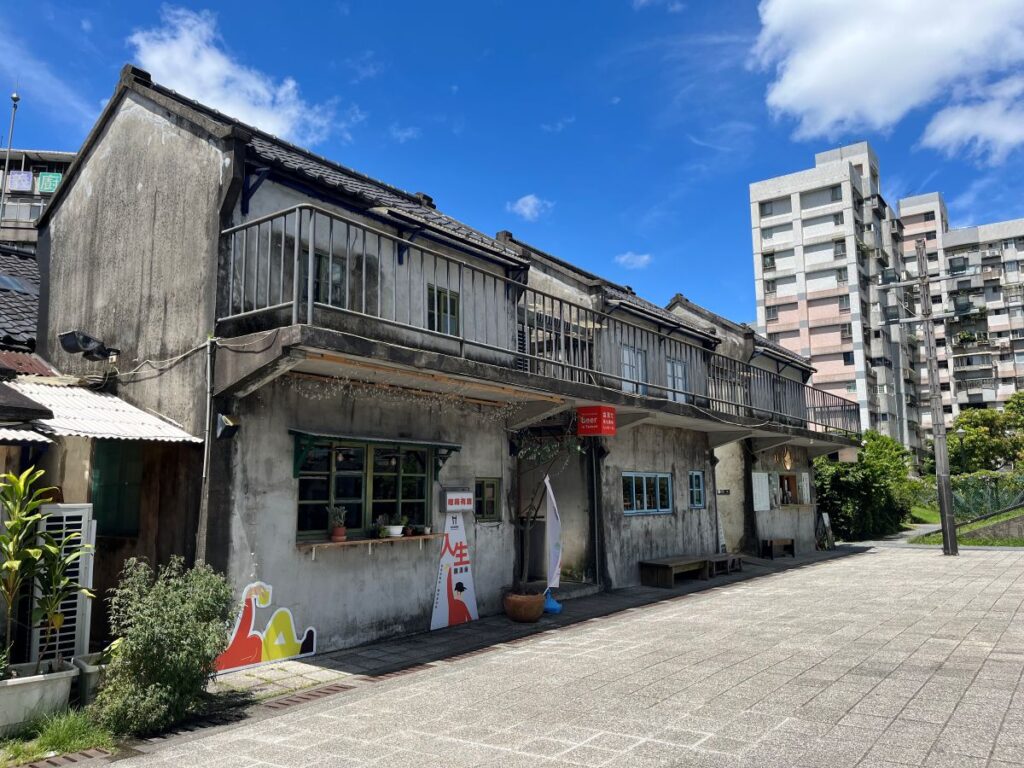
As you walk through the restored houses, you’ll notice the tiled roofs, old-style windows, and narrow lanes that once made up the village.
The contrast with the skyscrapers around you is striking, and you’ll find plenty of photo spots with Taipei 101 rising right behind the old homes.
Exhibition Hall
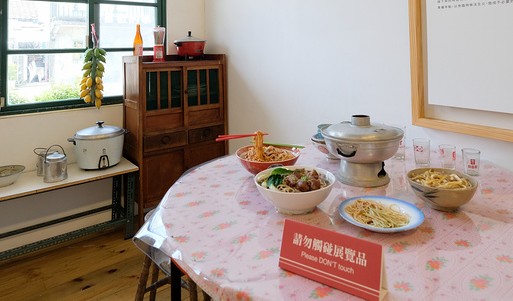
You can step inside one of the houses that has been turned into a small exhibition hall. The displays are simple, but they show how families lived here and the kinds of objects they used every day.
While I was going through the exhibition, I tried to imagine myself as part of a military family living here. At first thinking life in Taiwan was only temporary before returning to China, and then slowly realizing this was home for good.
I thought about how much the families must have depended on and supported each other in such a close-knit village. It was a very good history lesson and a reminder of how important this chapter of Taiwanese history is.
Final Thoughts
Four Four South Village is a small site, but it carries a big piece of Taiwan’s modern history.
Walking through the old houses gives you a sense of the community life that once thrived here, and the exhibition hall does a great job of telling the story of military dependents’ villages.
It’s worth stopping by, especially since it’s so close to Taipei 101. You can easily fit it into your itinerary and come away with a deeper understanding of how these families lived and supported one another during a difficult time in Taiwan’s past.
I hope this article is helpful to you!