Nanmen Market Taipei: Is It Worth Visiting? What to Expect and What to Eat (南門市場)
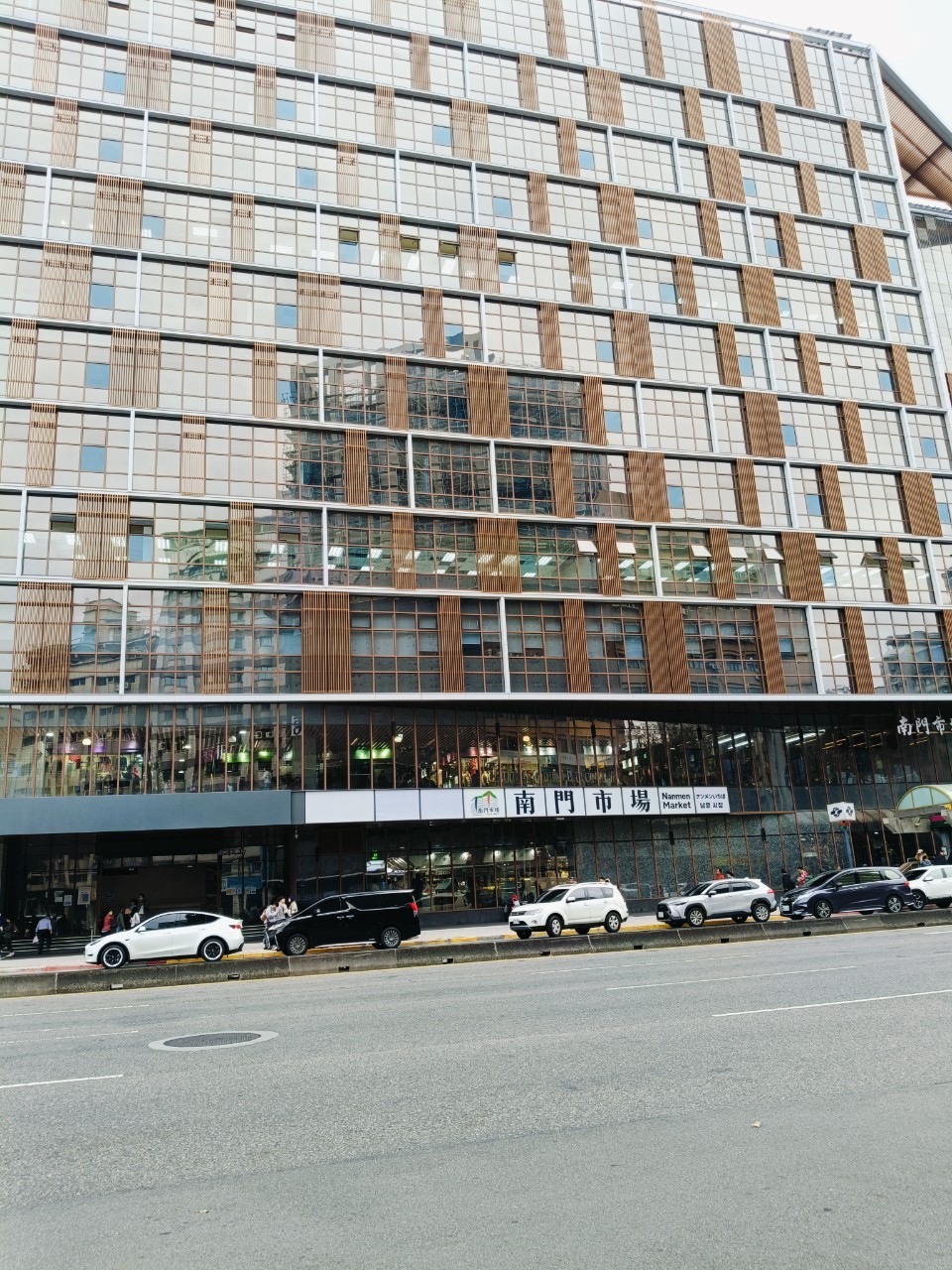
Do you like seeing how the local people actually live when you visit a place? Going to a traditional market is a great way. You get to see what locals buy and what they eat at home.
And in Taipei, Nanmen Market (南門市場) is one of the best-known traditional markets.
I’ve had quite a few experiences going to Nanmen Market over the past few years. My mom goes to church near the market on Sunday mornings, so when I am in Taipei, I often ride over with her and wander around while I wait.
In this post, I’ll show you what Nanmen Market is like, what I think is worth eating, and how to plan a visit.
Is Nanmen Market Worth Visiting?
YES, and here are my reasons.
In addition to everyday ingredients, Nanmen Market is best known for things you won’t find at an ordinary neighborhood market: the dishes locals love to eat on special occasions.
It also happens to sit right next to Chiang Kai-shek Memorial Hall, so you can fold it into a day you’re already spending in the area.
And you won’t leave empty-handed. There are many famous traditional and modern snacks to try, and a food court where you can sit down for a meal or dessert.
One more thing that makes Nanmen appealing: the market reopened in 2023 after a major renovation, and it’s now inside a new building. If you’re picturing a crowded market with wet floors, this is nothing like that. You can take your time and browse in comfort.
How to Explore Nanmen Market
Here’s the order I’d suggest: start on the first floor, then go down to B1, and finish upstairs on the second floor.
Start on the First Floor
This is the floor you walk into from the street, and it’s where most of the interesting things are.
The prepared dishes
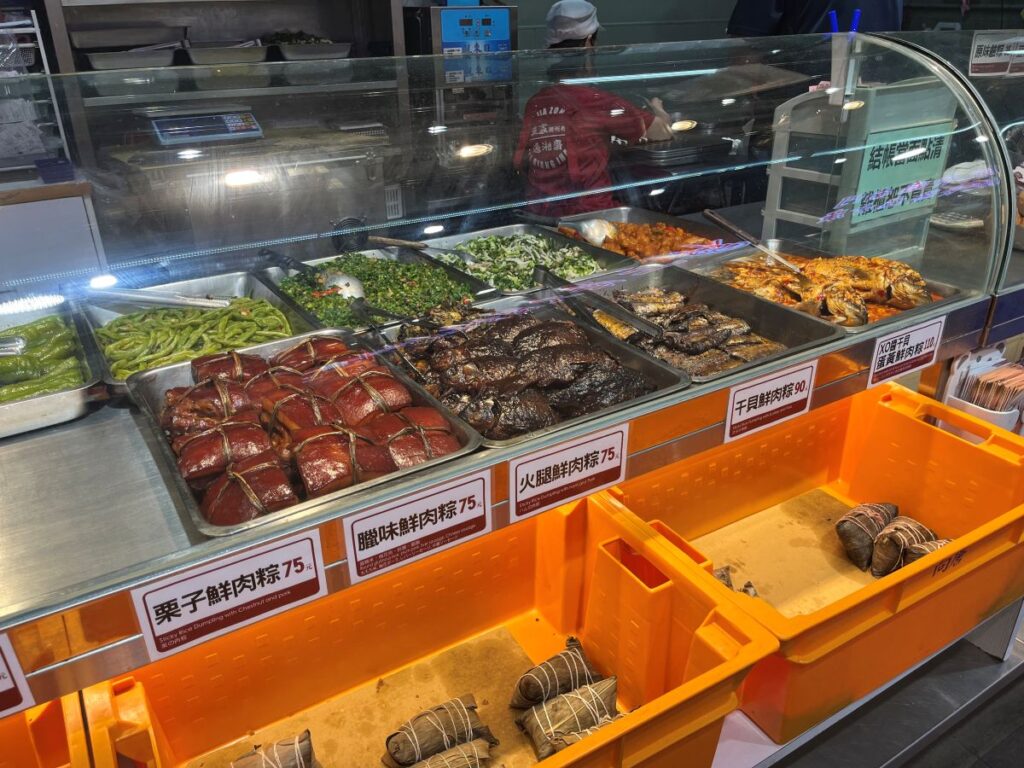
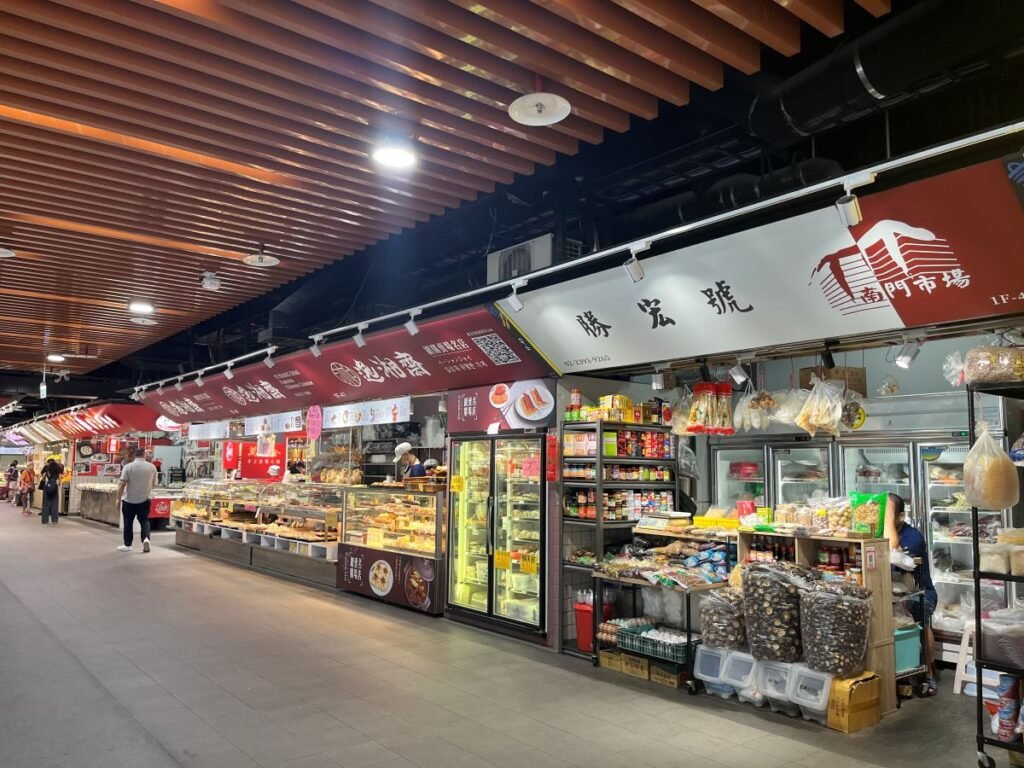
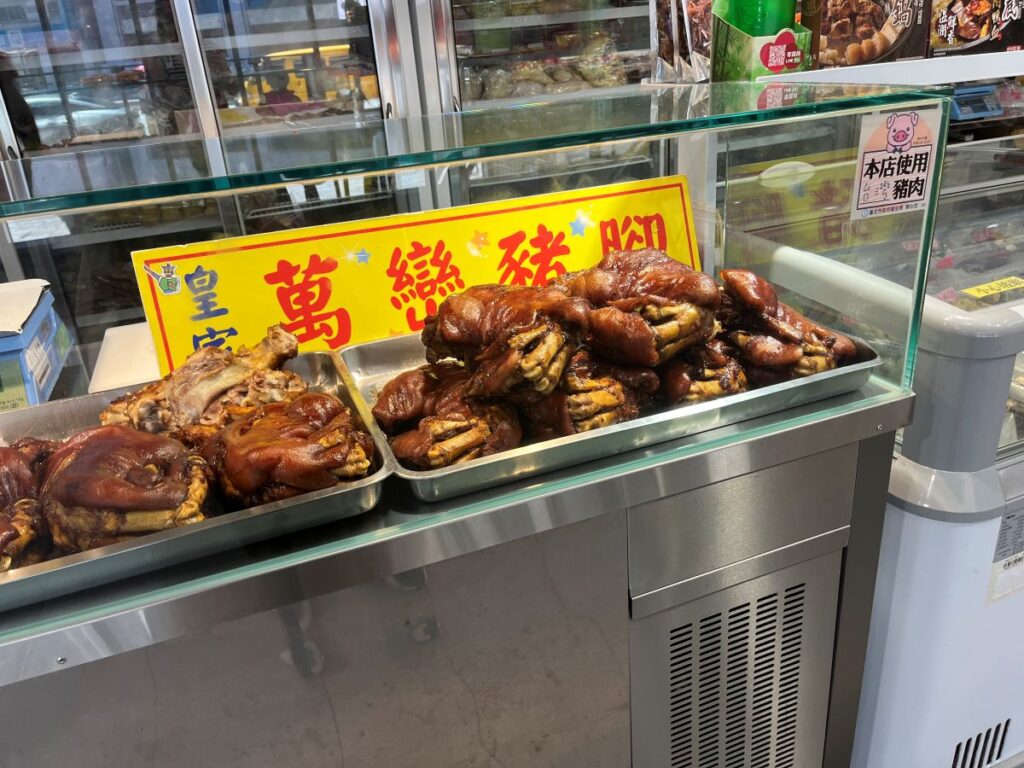
The first thing you’ll notice is tray after tray of finished dishes. Drunken chicken (醉雞), braised pork belly (紅燒肉), cured meats (臘肉), and many others.
Most of these aren’t meant to be eaten on the spot. People take them home and reheat them in a steamer or microwave.
So why buy a dish instead of cooking it? Because these are the ones that take real time and effort to make. Someone having guests over, or putting together a big meal for Lunar New Year, can buy a few of these and save themselves hours in the kitchen.
Many of these dishes came to Taipei with families who arrived from different parts of China after 1949, and they’ve been made here ever since. That’s part of why you’ll see things at Nanmen Market that you won’t find at an ordinary neighborhood market.
If something catches your eye, everything is packed in individual portions, so you can simply point at it.
You’ll also pass stalls selling dried goods and sauces. My mom comes here for these from time to time, usually when she wants a particular sauce she can’t find elsewhere.
Hoshin (合興糕糰)
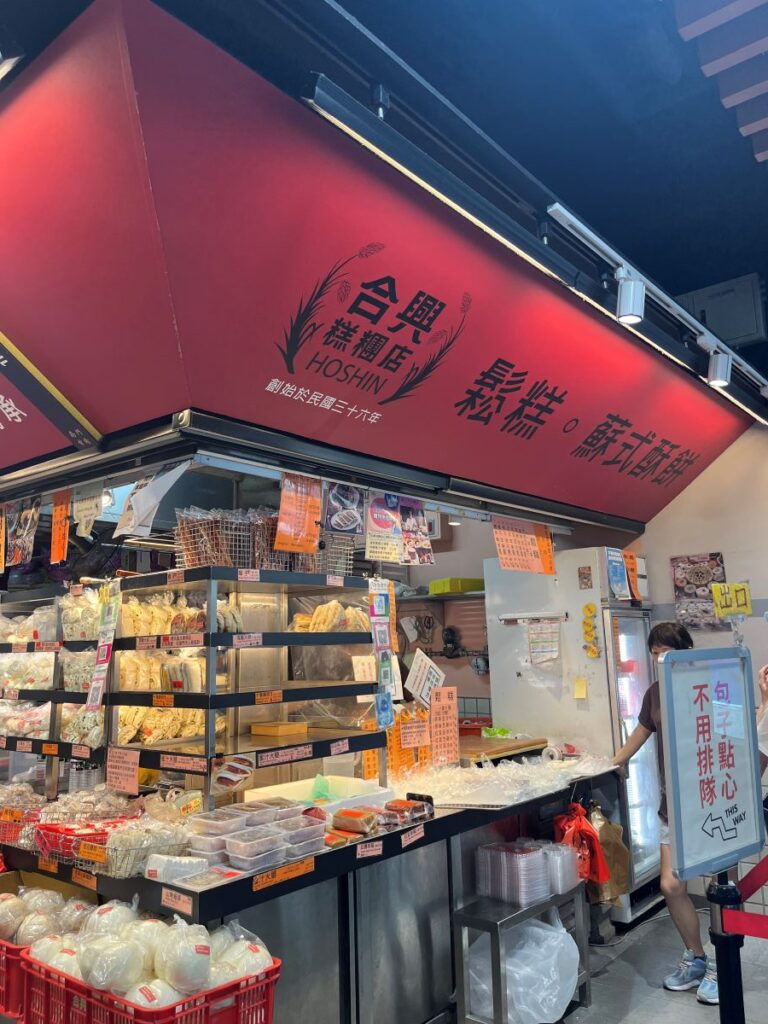
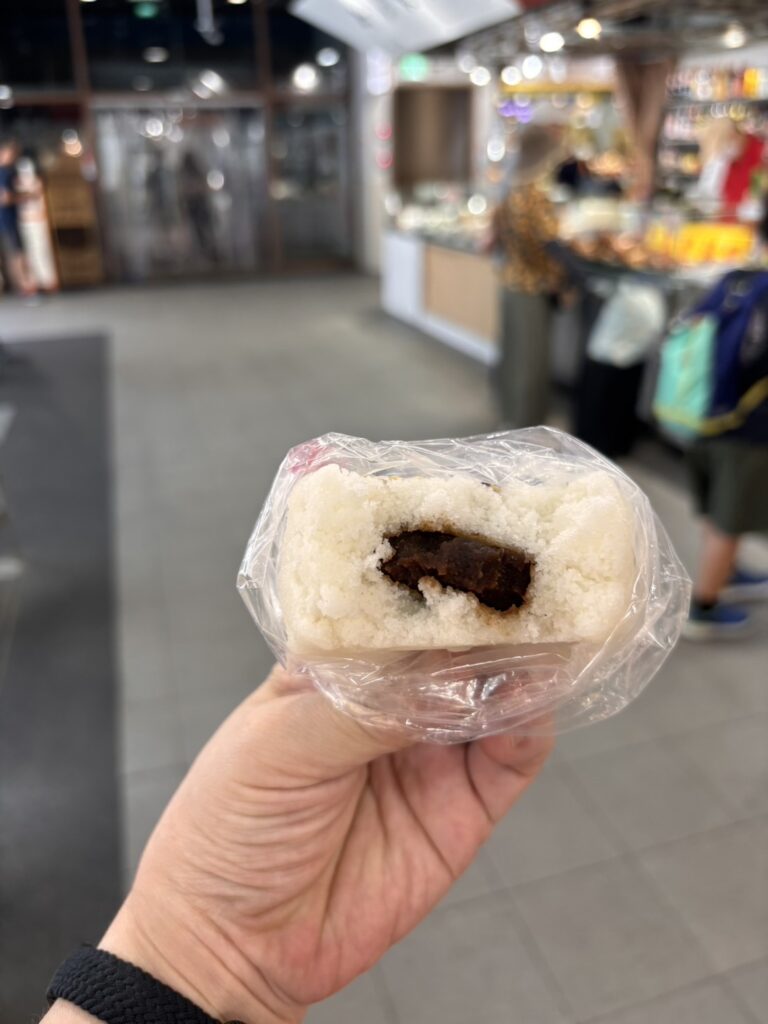
If you only buy one thing at Nanmen Market, I’d make it the steamed rice cake (鬆糕) from Hoshin.
This family business has been around since 1947, and its Nanmen stall has been here for more than sixty years. You’ll find it near the entrance on the first floor, and it’s hard to miss because there’s usually a line.
The steamed rice cakes are soft, fluffy, and lightly sweet. They come in flavors such as original, osmanthus, and red bean, with fillings including black sesame and jujube. They also sell buns filled with red bean, taro, and black sesame.
You can eat them right there, or take a box with you.
My husband is a big fan.
Last summer, on the day we were flying back to the U.S., my mom went to the market early and picked up three boxes for us to take home. Eighteen pieces in different flavors.
My first thought when she walked in with all those boxes was, How am I going to fit all of this in our suitcases?
It turned into a small game of Tetris, but I made it work.
We packed them in an insulated bag with ice and put the whole thing in my suitcase. I wasn’t sure how they would survive almost 24 hours of travel, but they held up surprisingly well. We enjoyed every last one after we got home.
Hoshin also has a branch on Dihua Street with a much prettier storefront. But the Nanmen Market location has simpler packaging and lower prices, and the rice cakes and buns are freshly made at both locations.
King Long Jerky (金龍肉乾)
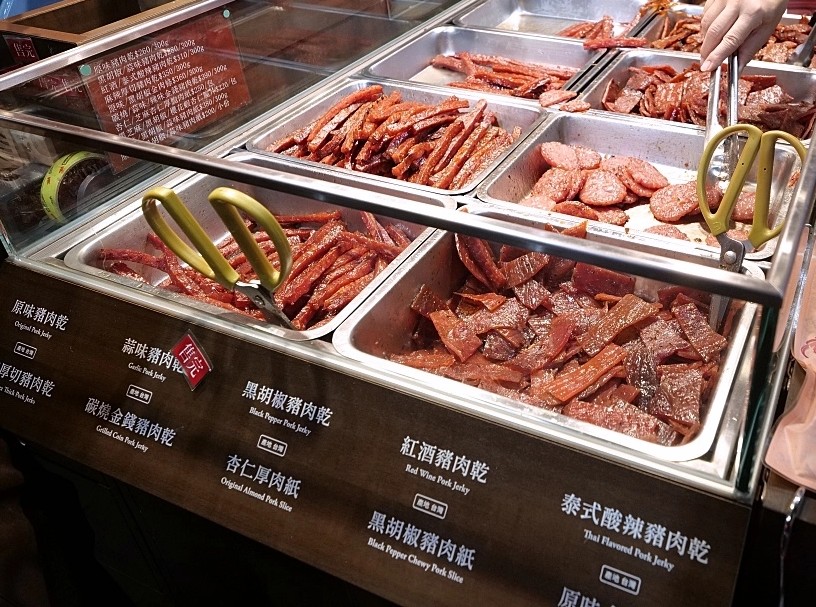
If you like beef or pork jerky, look for King Long.
The jerky is grilled fresh, and you’ll probably smell it before you see the stall. You can choose from classic sweet-and-savory flavors as well as black pepper and spicy versions.
Buy a small pack to eat while you’re walking around, or take some home. It travels well, so it makes an easy souvenir.
You’ll also come across savory snacks made fresh through the day, like shredded radish pastries (蘿蔔絲餅), if you’d rather have something warm than sweet.
Then Head Down to B1
Take the escalator down and you’ll find the fresh food: vegetables, meat, and seafood. This is the everyday side of the market, where people shop for what they’re cooking tonight.
I never buy anything down here, but I always walk through. I just like looking.
If you’re the kind of traveler who likes to see what people eat at home in another country, don’t skip this floor.
J-Sweetie Bakery
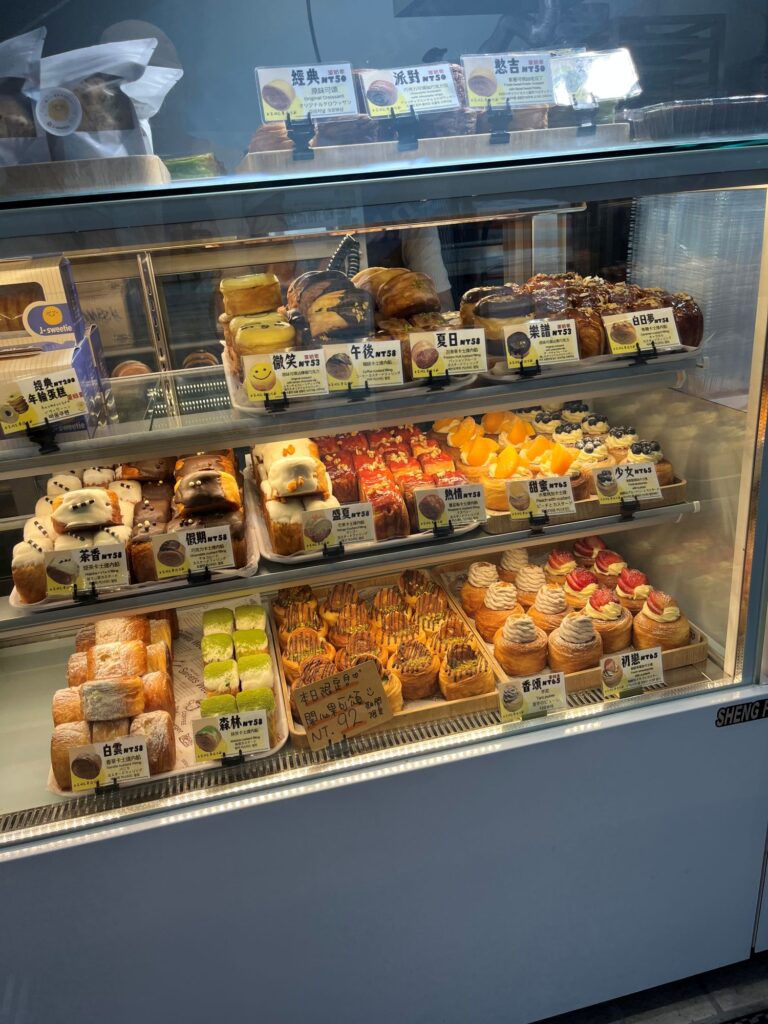
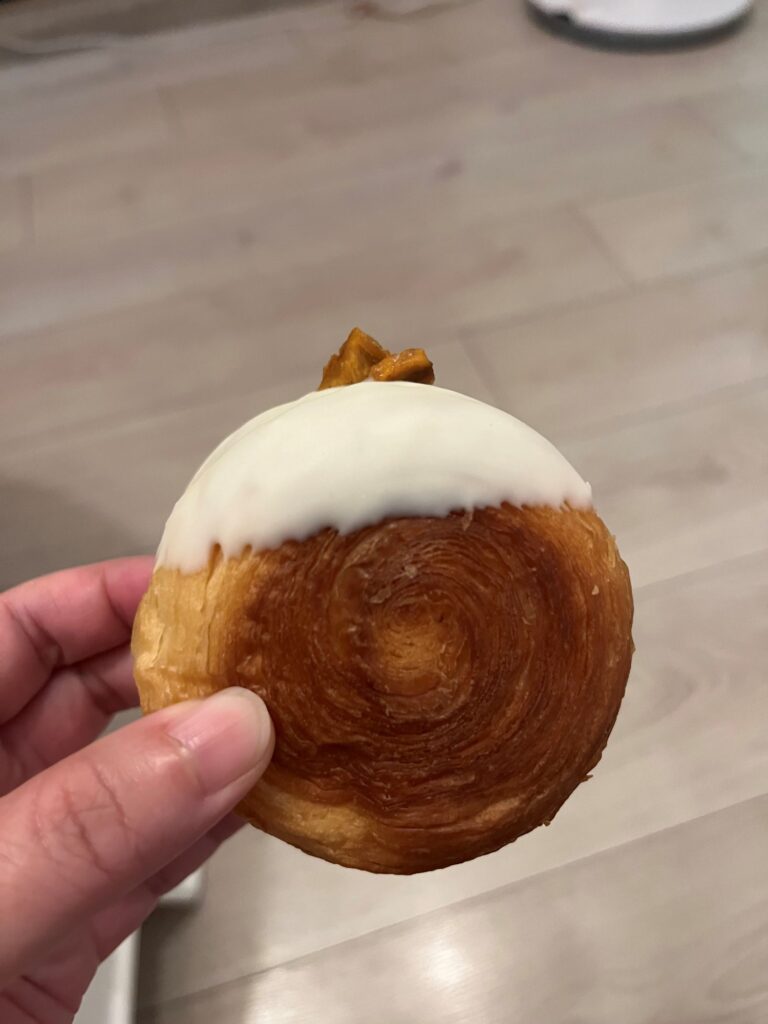
J-Sweetie is right by the escalator, so you’ll see it before you reach the fresh food stalls.
They’re known for stuffed croissants, with flavors such as strawberry custard and mocha coffee custard. The line can get long on weekends.
It’s also a good place to stop if you just want a cup of coffee.
Finish Upstairs on the Second Floor
The second floor is the food court, along with a few clothing and jewelry shops. Noodles, fried rice, dumplings, bubble tea, and other casual meals. If you’ve been walking all morning, this is where you sit down.
Hehuan Knife-Cut Noodles (合歡刀削麵)
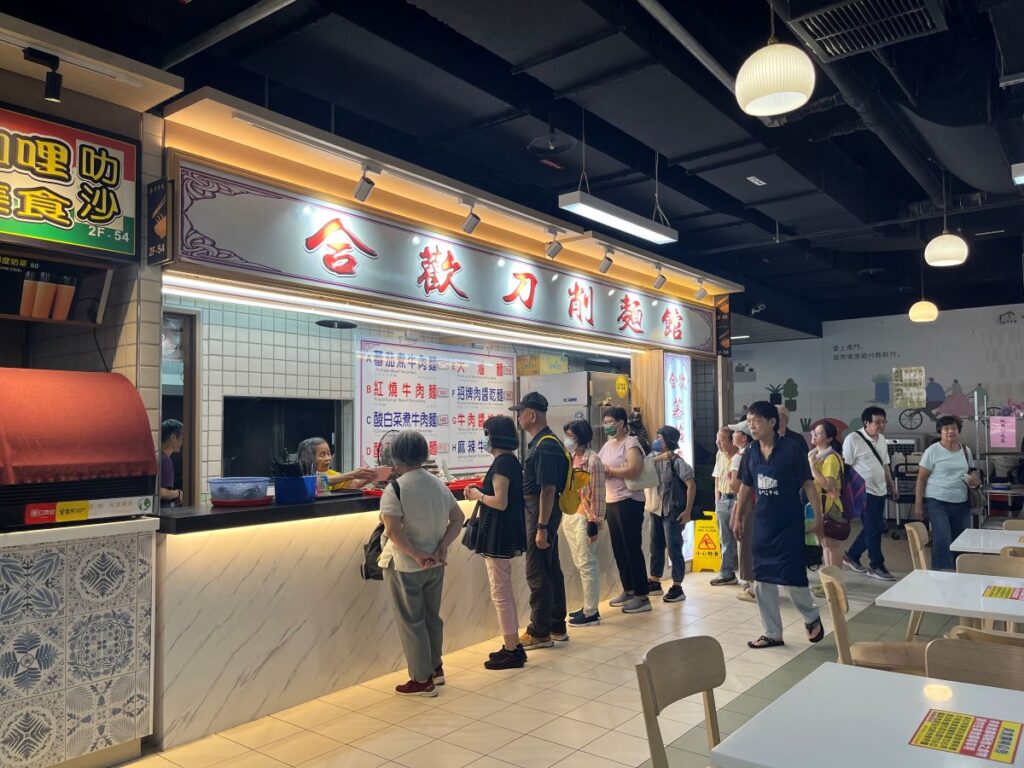
This seems to be the busiest stall in the food court by far.
They serve knife-cut noodles (刀削麵), and the line often starts outside the food court entrance.
I still haven’t tried it.
Every time I go, I see the line and decide I’m not in the mood to wait. Maybe next year I’ll finally do it.
Douhua (豆花)
There’s a douhua stall tucked into a corner of the food court. It doesn’t have an obvious sign or name that I could see, but it’s there.
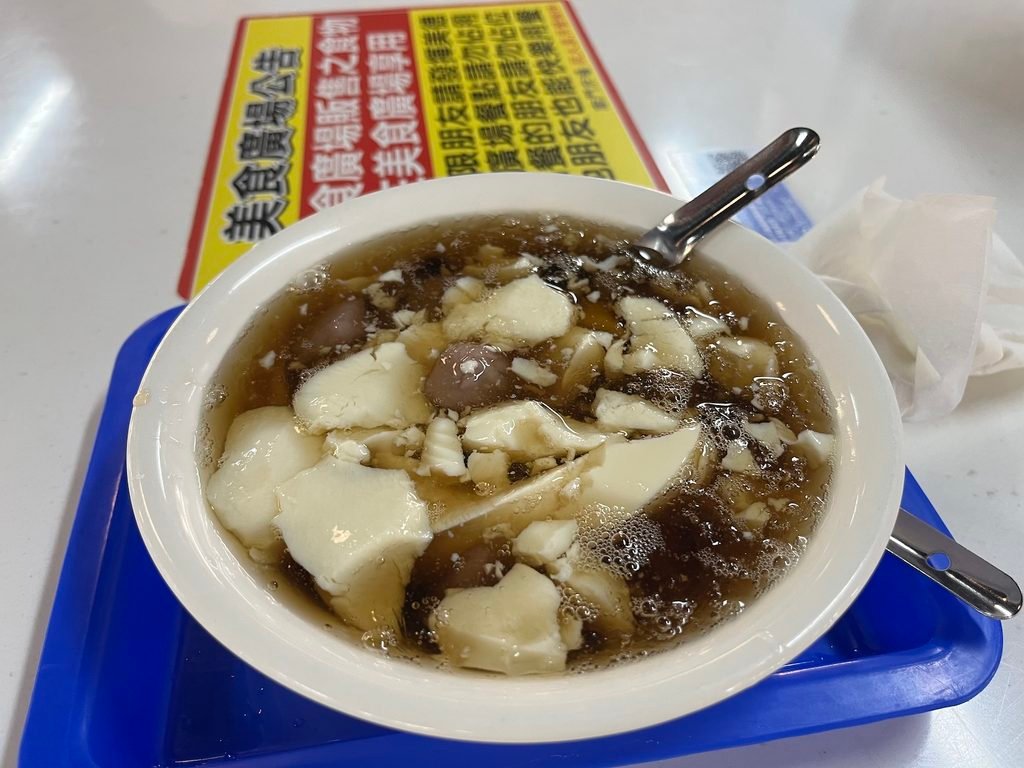
The last time I went, I ordered a bowl with Jiufen taro balls. It was exactly what I wanted on a hot summer day.
Douhua is a soft tofu pudding served with a light syrup. The taro balls were wonderfully chewy.
Jiufen is a hillside town outside Taipei that many visitors add to their itinerary as a day trip, and its taro balls are one of the things it’s known for. So if Jiufen doesn’t make it into your plans, you can still get a little taste of them here.
Practical Information
How to Get There
Here is the link to Google Maps: Nanmen Market
Nanmen Market sits right next to Chiang Kai-shek Memorial Hall.
By MRT, take the Red Line or Green Line to Chiang Kai-shek Memorial Hall Station (中正紀念堂站, R08 or G10) and use Exit 1.
The closest exit, Exit 2, has been under construction. From Exit 1, turn left and cross the street.
Opening Hours
- Closed on Mondays. Open Tuesday through Sunday.
- Doors open at 7:00 a.m., with stalls in full operation from 9:00 a.m.
- The second-floor food court opens at 9:30 a.m.
- Vendors start cleaning up at 6:00 p.m., and the market closes at 7:00 p.m.
When to Go and How Long to Stay
I’d plan on about an hour.
If you want to buy rice cakes, look around the market, and sit down for something upstairs, give yourself an hour and a half to two hours.
I usually go on Sunday mornings. A little after 9 a.m., the first-floor stalls are open and the market isn’t crowded yet.
The food court is slower to get going. When I’m there at that hour, the douhua and knife-cut noodle stalls are usually open while some of the other stalls haven’t started yet.
Those two happen to be the ones I’d go upstairs for anyway, so arriving early doesn’t really cost you anything.
Bring Cash
Most stalls take cash and some accept Taiwanese mobile payment apps, but don’t count on using a credit card, Apple Pay, or Google Pay.
If you’re visiting from overseas, cash is the easiest option.
Getting Around the Market
The market is located across 3 levels:
- B1 sells fresh produce, seafood, and meats.
- 1F is where you’ll find dried goods, sauces, prepared foods, and traditional snacks.
- 2F is where the food court is located. There are also clothing and jewelry shops.
The market has both an escalator and an elevator, and the entire building is indoors and air-conditioned. That makes it a comfortable place to visit on a rainy day or during Taipei’s summer heat.
One thing to know if you’re traveling with someone who needs to sit down: the second floor is where you’ll find the seating and restrooms. There isn’t really anywhere to sit on the first floor or in the basement, so plan to head upstairs if you need a break.
What to See Nearby
Chiang Kai-shek Memorial Hall
Chiang Kai-shek Memorial Hall (中正紀念堂) is just a short walk from the market, so the two are easy to visit together.
National Taiwan Museum Nanmen Branch
You can also add the National Taiwan Museum Nanmen Branch. All three are within walking distance of the same MRT station.
If you start in the morning, you can turn these into a half-day outing.
Final Thoughts
Nanmen Market has changed a lot over the years, but the foods and traditions that locals care about are still here.
The new building makes the market much more comfortable to walk through, and the long-time vendors keep its history alive.