What To Eat In Taipei In Winter: Seasonal Foods Locals Love

This post is about the seasonal foods you can find in Taipei during winter, and what locals love to eat when the weather gets cold. If you are visiting Taipei in winter and want to try some of them, here is my list.
The climate in Taiwan is often described as tropical, but winter in northern Taiwan feels very different. Taipei sits in a basin surrounded by mountains, which traps moisture and limits air movement. Because of the high humidity, winter days in Taipei often feel colder than the temperature suggests, especially on cloudy or rainy days.
To deal with the “bone-chilling” cold, there’s a strong local tradition of eating certain foods to “dispel the cold” (祛寒) and nourish the body.
These days, I only go back to Taipei in the summer because of my school-age son. It has been several years since I spent a winter in Taiwan, and I really miss these winter foods. When I was younger and working in Mainland China, I went back more often, including in winter.
Many of my strongest food memories come from those winter visits. We ate hot pot with friends and family on cold evenings, and I picked up warm snacks from street stalls and convenience stores.
Below are the foods you can find in Taipei when you visit in winter.
1. Ginger Duck Hot Pot (薑母鴨)
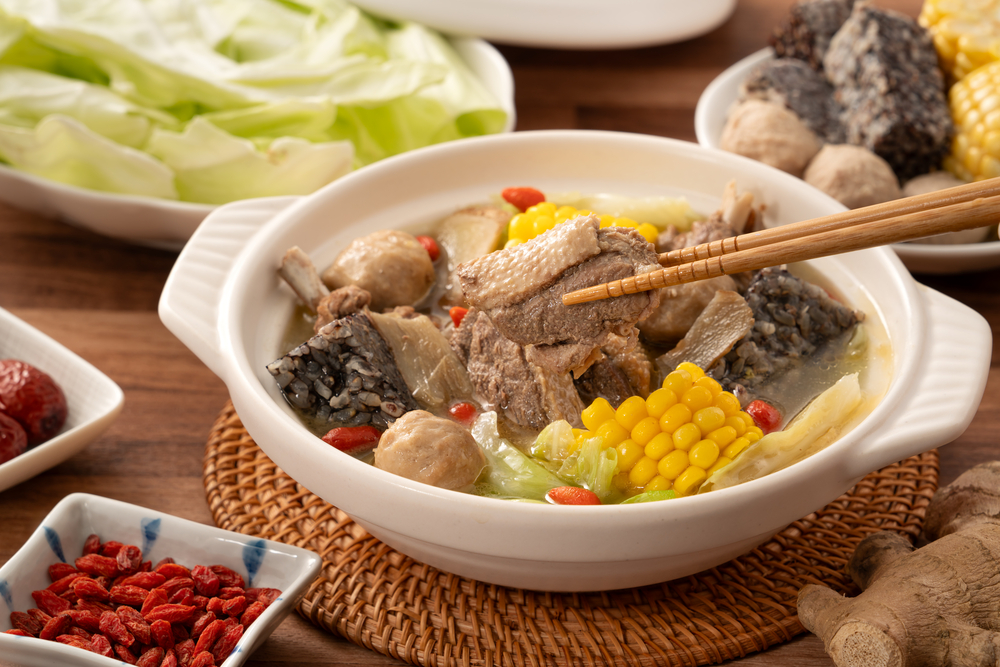
This is one of the most iconic winter foods in Taiwan.
Ginger duck has a very distinct flavor. Old ginger and sesame oil give the broth a strong, fragrant base, and the rice wine adds warmth. It’s a dish made for a cold night.
It’s served hot pot style and meant to be shared. The pot keeps simmering at the table, and you add cabbage, mushrooms, tofu, and noodles as you eat. People sit for a long time, talking and refilling their bowls.
I had my first ginger duck when I was working and living in Mainland China. In Suzhou, there was a popular Taiwanese restaurant that served only ginger duck, and it quickly became our go-to place in winter. Many winter evenings were spent there with friends, sharing a pot and lingering over the meal. Those are some of my fondest food memories from that time.
Back in Taipei, I once went to 霸味薑母鴨 (三重) with a group of friends on a chilly winter evening. The tables and seats were set low, which gave the place a very casual feel. People stayed long after they finished eating, and the atmosphere made it very memorable for me.
Sanchong is in New Taipei City, just across the river from Taipei. If that feels too far, Ba Wei has other branches, including the one listed below.
Ba Wei doesn’t take reservations. You take a number at the door and wait, and on cold nights the line can be long. To order, you check boxes on a paper sheet, a bit like the answer sheet for a multiple-choice exam, and hand it to the staff. If you can’t read Chinese, a translation app with a camera function helps.
One thing to know: the price of the pot covers the duck and broth only. Everything else is ordered separately. The most popular add-ons are thin wheat noodles (麵線), duck meatballs (鴨肉丸), fried tofu skin rolls (響鈴捲), cabbage, and frozen tofu. Locals also love rice blood cake (米血) and duck blood (鴨血), if you’re feeling adventurous.
The broth is cooked with rice wine. Ba Wei’s version is on the lighter side, without a strong alcohol taste, and it’s known as one that both adults and kids can enjoy.
Ginger duck is the thing I miss most about winter in Taiwan.
I also asked my friends for more recommendations. Here are two other popular ginger duck restaurants and their Google Maps links:
- 新店阿蘭姐薑母鴨 (Xindian, New Taipei City; takes phone reservations)
- 霸味薑母鴨(民權店)
Ginger duck restaurants usually open only about six months a year. Most start when the weather turns cool in autumn and close around April. If you visit between November and March, you’ll find them open. In October or April, check the restaurant’s Facebook page first.
Many of these places rent out their storefronts in summer to shops selling shaved ice and other cold desserts, which helps with rent. Most are also family businesses, so staffing is less of an issue.
That they can earn enough in winter to close for half the year tells you how much people here love ginger duck!
By the way, if you are feeling overwhelmed by all the choices in Taipei, I can help. You can send me your itinerary for a review, and I’ll give you my feedback to make sure your trip is smooth and enjoyable. Just Click Here to learn more.
2. Mutton Hot Pot (羊肉爐)
Like ginger duck, mutton hot pot is meant to be shared.
You’ll often hear people mention 冬令進補, the idea that winter is a time to nourish the body. Mutton is considered warming, which is why this dish shows up so often in the colder season.
Some people worry about the gamey taste of mutton, and that hesitation is common. When it’s done well, the meat is tender and the flavor is balanced, without the strong gamey taste many people expect.
The broth is usually simmered with mutton and herbs. Some versions are light and clear, while others are richer. Compared to ginger duck, mutton hot pot tastes milder.
Some mutton hot pot restaurants close in summer like the ginger duck places. I haven’t been to these two myself, but my friends recommend them:
- 下港吔羊肉專賣店: About a five-minute walk from Minquan West Road MRT Station. It’s open all year and stays busy even in summer.
- 阿財蔬菜羊肉爐: Known for its light, vegetable-based broth, so it’s a good choice if you’re worried about the gamey taste. It’s open until 1 a.m.
3. Hot Pot (火鍋)

Besides ginger duck and mutton, there are many other hot pot restaurants with different broths and styles.
Some focus on spicy broth (Sichuan hot pot, 麻辣鍋), others offer clear or herbal soups, and many have both. Personal hot pot restaurants have also become popular in recent years, so there are options for big groups and solo diners.
Unlike ginger duck and mutton hot pot places, these restaurants are open all year.
Do they get enough business in the hot months? I used to think eating hot pot in warm weather sounded strange, until I found myself in a crowded, fully air-conditioned hot pot restaurant in summer, enjoying it anyway. Taiwanese people just love hot pot, no matter the season. Still, a cold, damp winter night is when it feels best.
The place I usually go with my friend Carrie is a personal hot pot chain: 錢都刷刷鍋. You can click the link to find a location near you. This chain is very budget-friendly.
4. Sesame Oil Chicken (麻油雞)
Sesame oil chicken is made with chicken, sesame oil, ginger, and rice wine. It’s a soup rather than a cook-at-the-table hot pot. People like to add thin wheat noodles (麵線) to the soup.
Compared to ginger duck or mutton hot pot, sesame oil chicken feels more home-style. Many people grew up eating it, though it wasn’t common in my own family.
It’s also commonly eaten during 坐月子, the traditional postpartum recovery period. Because of that, people associate it with nourishment, which ties it naturally to 冬令進補 and winter eating.
I haven’t tried a sesame oil chicken restaurant in Taipei, but my friend Vivian highly recommends this chain: 阿圖麻油雞.
5. Sishen (Four Herbs) Soup (四神湯)
This is a light soup made with four herbs: lotus seeds, Chinese yam, poria, and gorgon fruit. In Taiwan, you’ll also see Job’s tears (薏仁), pork ribs, or pork intestines added to the soup.
Sishen soup is the gentle option of winter 進補. If ginger duck or mutton hot pot feels too heavy for you, this is a milder way to join the tradition. You get something warm without feeling overly full.
This is the place we like: 阿桐阿寶四神湯. It’s pretty close to Ningxia Night Market (寧夏夜市).
6. Tangyuan (湯圓)

Tangyuan are glutinous rice balls served in a warm sweet soup, and they’re closely tied to winter in Taiwan.
For many Taiwanese people, eating tangyuan on 冬至 (Dongzhi, the Winter Solstice and the shortest day of the year) is an important tradition, and my family follows it too. Dongzhi falls on December 21 or 22, so if your trip includes those dates, it’s a good day to try them.
Even though I live abroad now, I still buy a pack of tangyuan at an Asian supermarket every winter. I usually choose black sesame or red bean filling, and my son enjoys them too.
Where to eat tangyuan:
- 雙連圓仔湯: A classic dessert shop that opened in 1951, known for small tangyuan in red bean or peanut soup. Closed on Mondays.
- 施家鮮肉湯圓: This one surprises many visitors because the tangyuan are savory, filled with pork and served in a broth with celery and fried shallots. It’s in Yansan Night Market, about a five-minute walk from Daqiaotou MRT Station, and it has been on the Michelin Bib Gourmand list.
- Din Tai Fung: If you’re already planning a meal there, their tangyuan is worth ordering for dessert. It’s not their main focus, but I tried it a while ago and remember it being very good.
If you have a kitchen during your stay, you can pick up frozen tangyuan at a supermarket or even a convenience store. Put them in boiling water for about 8 to 10 minutes, and they’re ready to eat.

7. Hot Grass Jelly (燒仙草)
Grass jelly is usually a summer dessert, but in winter it shows up in a completely different form.
Hot grass jelly is thick and syrupy, with a mild, slightly herbal flavor. It isn’t very sweet, so it still works after a heavy meal.
It’s rarely served on its own. Most shops add toppings like red beans, peanuts, taro balls, or sweet potato balls. You’ll see stalls selling it at night markets, and dessert chains like Meet Fresh also offer it alongside their taro desserts. Meet Fresh has many locations around Taipei, so you’ll likely pass one.
8. Red Bean Cakes (紅豆餅)

Red bean cakes are a common street snack, and you’ll often see small stalls making them fresh to order. You can find them all year, but the hot filling is especially nice in the cold months.
The batter goes into round molds, gets filled with red bean paste, and cooks until the outside is lightly crisp while the inside stays soft. Red bean is the classic filling, but many stalls also offer custard, taro, or peanut.
Red bean cakes are one of my favorite snacks. Every time I go back to Taiwan, they’re on my must-eat list, along with tofu pudding (豆花). The photo above is a red bean cake my dear friend Chynna brought me when we met up in Taipei last summer. It was so sweet of her to remember my favorite snack!
9. Sweet Potatoes (地瓜)

The most common place to get them is a convenience store. Many 7-Eleven and FamilyMart locations keep roasted sweet potatoes warm near the entrance, so you can grab one while walking around.
You’ll also see street carts selling them along busy roads, and at night markets in the colder months.
They’re usually eaten plain, with no seasoning. The flesh is soft and warm, and the natural sweetness stands out more in winter. They’re cheap and filling, which is why so many people reach for one on a cold day.
Final Thoughts
Winter in Taipei may feel colder than you expect, but the food makes up for it.
If a friend visiting in winter could only pick one thing from this list, I’d tell them to go for ginger duck. It’s a very satisfying meal, and sitting around a simmering pot on a cold night is the experience I miss most.
The rest fit right into a day of sightseeing. Grab a sweet potato at a convenience store or a red bean cake from a street stall when you need something warm.
If you are feeling overwhelmed by all the choices in Taipei, I can help. You can send me your itinerary for a review, and I’ll give you my local’s feedback to make sure your trip is smooth and enjoyable. Just Click Here to learn more.