This Taipei Museum Was Once an Opium Factory: National Taiwan Museum Nanmen Branch (國立臺灣博物館南門館)

I visited the Nanmen Branch of the National Taiwan Museum on a hot summer day in 2025.
I was having a bowl of tofu pudding (豆花) on the second floor of Nanmen Market when I searched for nearby attractions and noticed this museum, just a few minutes away on foot. I decided to walk over and take a look.
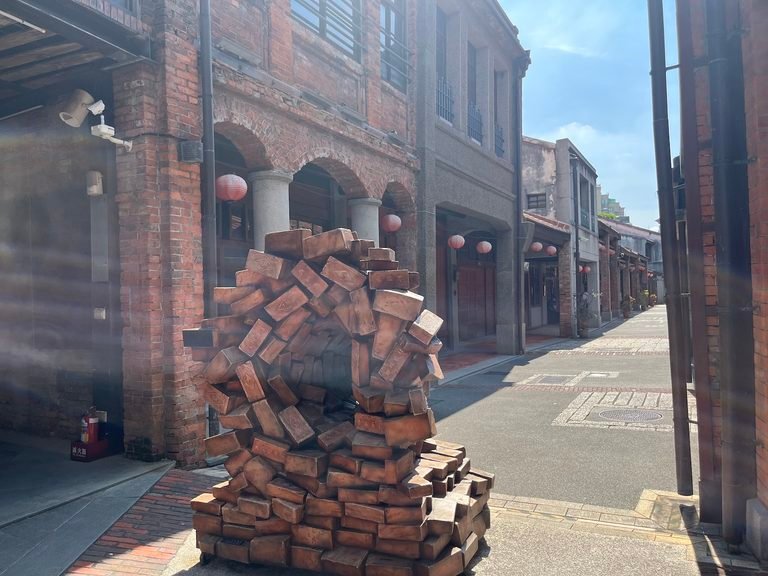
The walk took about five minutes, and most of it was under covered walkways, which matters a lot on a hot Taipei afternoon. Then I saw the red brick building from a distance. It stands out, and I loved it right away.
The museum was once a government-owned factory during the Japanese colonial period. It played a central role in two tightly controlled industries: camphor and opium (yes, you read that right, opium).
It is a small museum, but it gives you clear context for an important period in Taiwan’s history. If you are curious about Taiwan beyond food, shopping, and landmarks, this is a good place to spend an hour or two.
Visiting National Taiwan Museum Nanmen Branch
- Google Maps: National Taiwan Museum Nanmen Branch
- MRT: Red Line or Green Line to CKS Memorial Hall Station, use Exit 1 or Exit 7. Walk 5 minutes.
- Hours: Tuesday-Sunday: 9:30 am-5 pm (Ticket Booth Hours : 9:30 am – 4:30 pm)
- Tickets: NT$30 for Adults / NT$15 for Students and Seniors (about 1 US dollar/50 cents. Very affordable!)
The Building Structures


The first thing you’ll notice is the beautiful red brick building, often referred to as the Red House. It was originally a camphor warehouse and is now where the main exhibitions are located.
Nearby is the so-called Little White House, which served as the warehouse for opium at one time. It is now an open space used to house special events. The space was empty when I visited, and I really loved the building’s architectural design.

You’ll also notice other exterior elements as you walk around the site, including a large historic water reservoir and sections of the original perimeter wall. There is a small garden with trees, which is where I would head if I needed to get out of the sun for a few minutes.
The red brick exterior, the open space between the structures, and the layout of the site make this a quiet place to walk around. I spent a while just photographing the outside of the buildings.
Even if you’re not particularly interested in the exhibitions inside, this is still a lovely place to walk around and take beautiful photos.
What You’ll See Inside The “Red House” Building

The exhibitions on camphor and opium are part of the permanent collection and are located on the first floor.
You’ll see many displays explaining how these industries were managed under the government monopoly system during the Japanese colonial period, from production and processing to storage and regulation.
I spent close to an hour on this floor. There is a lot of detail in the labels, and it is worth slowing down for. All of it is in Chinese and English.
The second floor is used for special exhibitions, which change from time to time. When I visited, the exhibition upstairs was about environmental protection and sustainability, and how to start with small changes at home. I spent about 20 minutes there.
A lot of it was written for children, with hands-on and interactive displays. If you have kids with you, they could easily spend longer up there than I did. Whatever is showing when you visit will be different, so check the museum website before you go.
“Nanmen Factory” During The Japanese Colonial Period
During the Japanese colonial period (from 1895 to 1945), this site functioned as a government-owned factory (Nanmen Factory). It was part of a monopoly system that placed camphor and opium under strict state control.
Camphor
Before I came here, what I knew about camphor was that you put mothballs in your closet to keep insects away and stop things from getting moldy. That was it.
The exhibition showed me how much I had missed. Camphor went into medicine, industrial products, and far more everyday goods than I expected. And Taiwan was one of the world’s most important sources of it.
Because it was valuable, camphor production was tightly managed by the government. This factory was part of that centralized system, handling the material as it moved through processing and storage.

Opium
I had always assumed opium was simply illegal back then, produced in secret and sold on the black market. That is not what happened here.
Under the Japanese colonial government, opium was made a state monopoly instead. Only registered users with permits could legally purchase it, and all distribution was managed by the government. The policy aimed to limit use and gradually reduce the number of users over time, while keeping the trade under tight supervision.
This site was part of that system, involved in inspection and storage. Official opium production continued until June 1945, near the end of Japanese rule.

After The Japanese Colonial Period
After Japanese rule ended in 1945, the site was taken over by the Republic of China government and continued to operate as part of the state monopoly system.
As global demand for natural camphor declined and synthetic alternatives became more common, the factory gradually lost its purpose. Operations officially ended in 1967.
Over time, most of the original factory land was redeveloped for government use. Only a small portion of the original complex was preserved, which is what you see today.
What Else Is Nearby
This museum sits in an easy corner of Taipei to build half a day around.
Nanmen Market is about five minutes away on foot, and most of that walk is under covered walkways. The second floor food court is where I had my bowl of tofu pudding before I came here.
Chiang Kai-shek Memorial Hall is also a short walk away, and you use the same MRT station for both. If you are already planning to see the memorial hall, this museum fits in without any extra travel.
Final Thoughts
Is this museum worth your time? It depends on why you would come.
If you are interested in Taiwanese history, I think it is worth a trip on its own. Many visitors notice traces of Japan while walking around Taipei, since Taiwan was a Japanese colony for fifty years. If you want to understand more about that period, this is a good place to start.
If history is not really your thing but you are already around Chiang Kai-shek Memorial Hall or Nanmen Market and want somewhere to stop for a while, this works well too.
And if you like taking photos, the red brick buildings alone are a good reason to come.
One more thing worth knowing. Taipei summers are hot and the rain can arrive without warning. The main exhibition building is air conditioned, so this is a useful place to have on your list when you need to get indoors for a couple of hours.