Best Souvenirs from Taiwan and Where to Get Them
Shopping for souvenirs in Taiwan can be surprisingly overwhelming.
You’ll find beautifully packaged snacks, tea, alcohol, creative stationery, and local design goods everywhere, from bakeries and convenience stores to department stores and design shops.
However, not every souvenir from Taiwan is worth your luggage space.
I’ve been living in the US for years, and I go back to my hometown of Taipei every summer. Over the years, I’ve bought all kinds of things to bring back for neighbors, friends, colleagues, and myself. Along the way, I’ve found a few favorites that I’m always happy to bring home and share with others.
Below is what I buy. I’ve categorized them into “Food Souvenirs” and “Non-Food Souvenirs”. I’ve also included a few famous items that I would not put in my suitcase, and I’ll tell you why.
Best Food Souvenirs
Pineapple Cakes (鳳梨酥)
If you only bring home one food souvenir from Taiwan, make it pineapple cake! It’s the most famous and widely recognized Taiwanese treat.
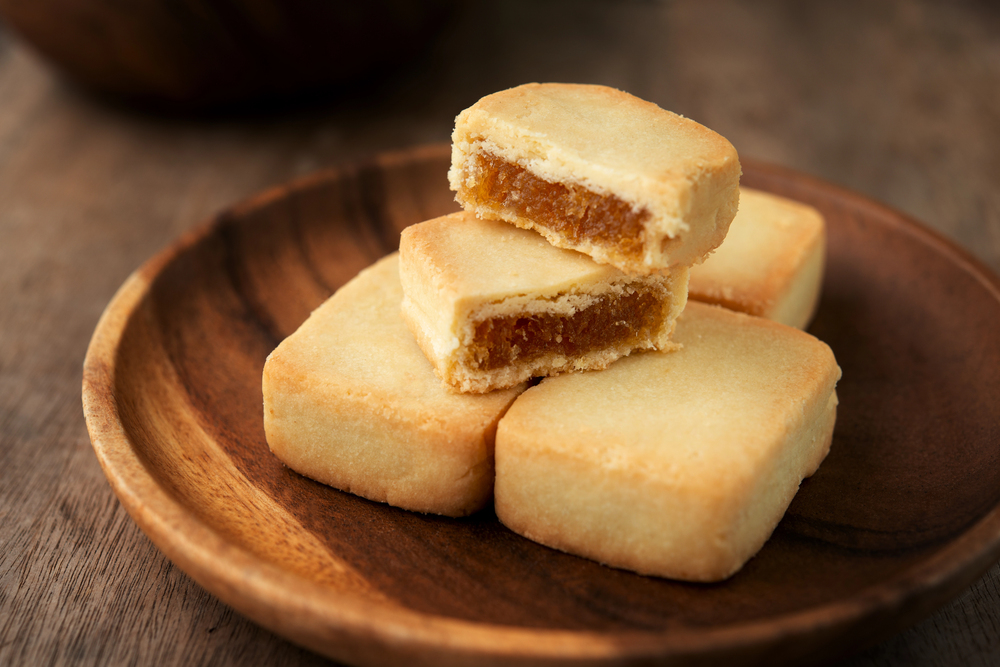
So many brands make pineapple cakes that picking one becomes its own problem. Let me list a couple of brands that I keep coming back to.
ChiaTe (佳德)
Besides the original pineapple flavor, they make cranberry-pineapple and pineapple-egg yolk. The cranberry-pineapple is a favorite in our family.
I used to wait in long lines at their Taipei shop (see it on Google Maps) just to get a box, but now you can get them in convenience stores. It costs a bit more that way, but it saves a lot of time and hassle.
If you’d rather order online and have them delivered to your hotel, you can visit their official website, where you’ll also find their other pastries.
Din Tai Fung (鼎泰豐)
Yes, this famous xiaolongbao restaurant sells pineapple cakes. If you’re already planning to eat there, just grab a box at the cashier.
I first tried them when my dad brought a box home a couple of summers ago. One bite and I was sold.
I especially like the way the soft crust and pineapple filling go together. The crust is soft and crumbly, and it almost melts in your mouth. The pineapple filling is soft and slightly chewy, with a natural pineapple flavor and just the right amount of sweetness. It has a little tartness too, so the filling doesn’t taste overly sweet.
Din Tai Fung uses a quality Taiwanese pineapple variety and the ingredient list is short. My dad is very particular about what he eats, so the fact that he approves already tells you something.


Pan’s Cake (小潘蛋糕坊)
A well-loved bakery known for affordable, delicious pineapple cakes.
They make the classic version, but the one people line up for is the “鳳凰酥,” pineapple filling with salted egg yolk. Sweet and savory in the same bite, and it works better than it sounds.
Pan’s Cake has two stores in New Taipei City (see Google Maps), but I just pick theirs up at 7-Eleven.
This is my favorite pineapple cake of all the brands I’ve tried, and it’s the one I recommend to friends who like a mix of sweet and salty.
Individually Wrapped Pineapple Cakes At 7-11 (Summer Only)
If you’re visiting Taiwan between July and September, keep an eye out for individually wrapped pineapple cakes at 7-Eleven.
They are part of the seasonal offerings for the Mid-Autumn Festival (中秋節), which is usually celebrated in late September/early October. In Taiwan, besides mooncakes, pineapple cakes are also a popular gift to give to family and friends.
Buying individually wrapped pineapple cakes from 7-Eleven is a great way to try different brands at once. If you find a favorite, you can then visit that brand’s bakery and buy more.
Or, just buy them as they are to bring home. It costs a little more that way, but it saves you a lot of time and hassle.
I did that one year. One day before my flight back to the US, I went to several 7-Eleven locations nearby and bought a bunch from multiple brands. I brought them home partly for my husband to try and partly (or mostly) for myself to enjoy once I got home.

Nougat Crackers (牛軋餅) and Nougat (牛軋糖)
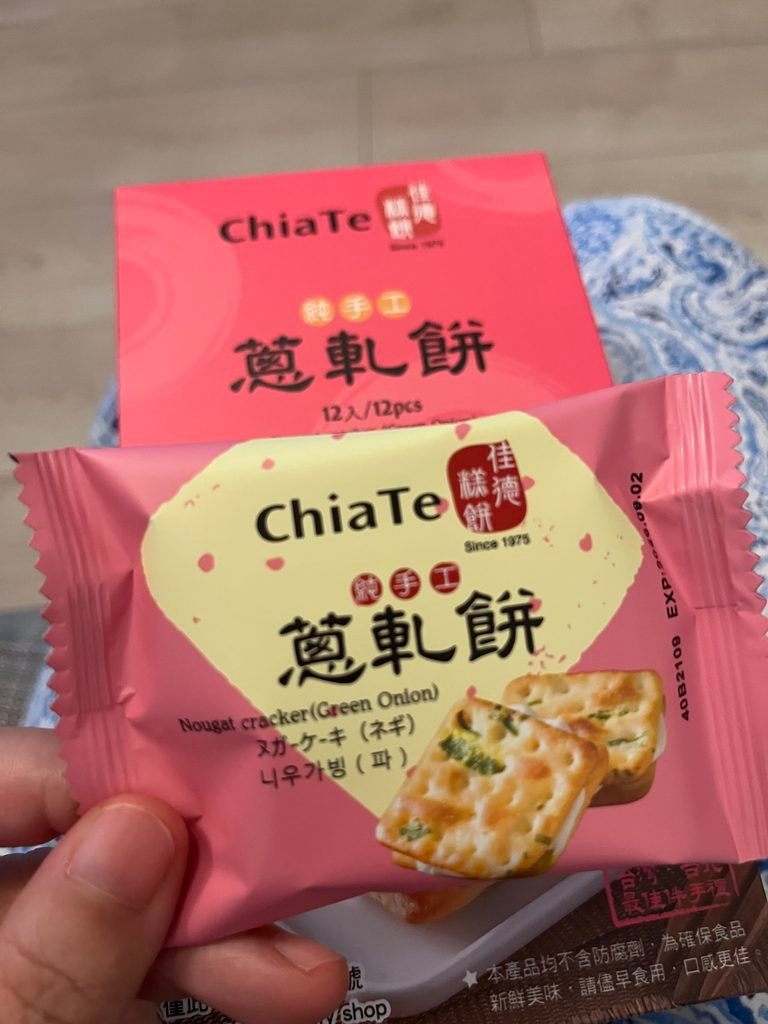
Nougat crackers sandwich has a layer of nougat between two crisp, slightly savory crackers. They’re more substantial than the candy on its own, and the flavor has more going on.
My son is the opposite. He goes straight for the nougat. So if you have a sweet tooth, buy the candy. If plain nougat is too sweet for you, the crackers give you something to bite into.
Taiwanese nougat itself is softer and creamier than the hard European kind, and it’s packed with almonds or peanuts. You’ll see plenty of flavors beyond the classic milk, including cranberry, matcha, black sesame, and coffee.
I’ve bought nougat crackers from several bakeries. The three I’d point you to are L’Atelier Lotus (甜滿) and Sweedom (甜境), both on Yongkang Street, and ChiaTe (佳德), the same bakery famous for pineapple cakes.
All three taste good to me. But if I had to choose a favorite, I’d go with ChiaTe because I like the savory scallion flavor in the crackers. It balances out the sweetness of the nougat filling.
ChiaTe wraps each cracker individually, which makes them easy to pack and easy to hand out. L’Atelier Lotus and Sweedom sell theirs stacked loose in a plastic box, about ten to a box. Not pretty, and not built for a suitcase.
Sun Cake (太陽餅)
Sun cake is just as famous as pineapple cake. It comes from Taichung, and it’s a flaky pastry with a malt sugar filling and thin buttery layers.
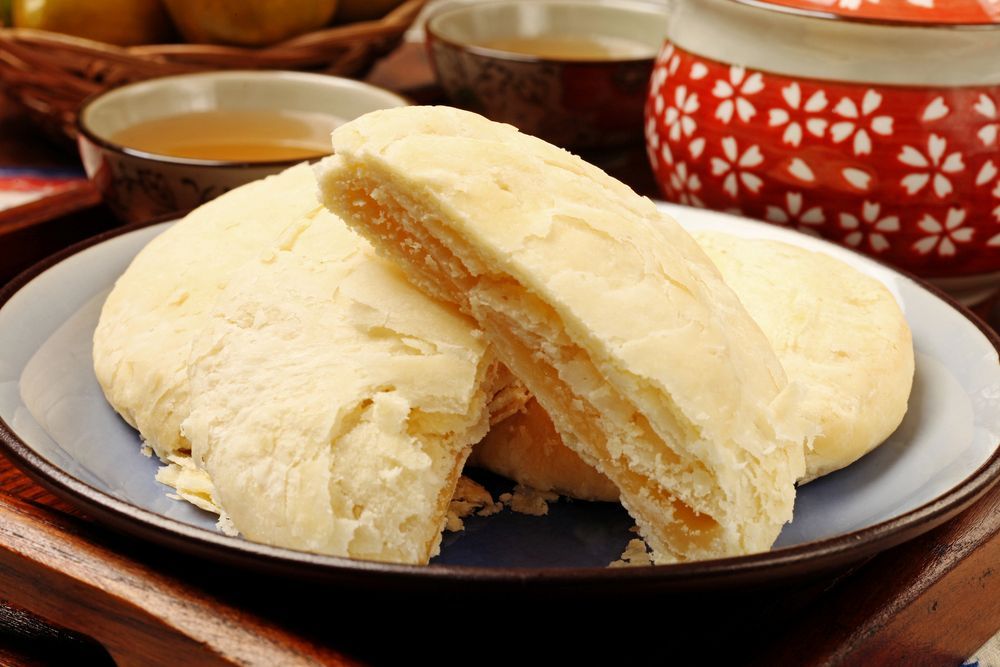
I buy sun cake, but I never bring it home.
Those layers are the whole point of the pastry, and they’re also the problem. Press on it even a little and it collapses. Put a box in a suitcase and you’ll open a bag of crumbs.
So I treat it as something to eat in Taiwan, not something to pack. Bakeries sell it, and convenience stores sometimes carry it too. I buy one, eat it on the spot, and move on.
Chihshang Rice Crackers (池上米餅)
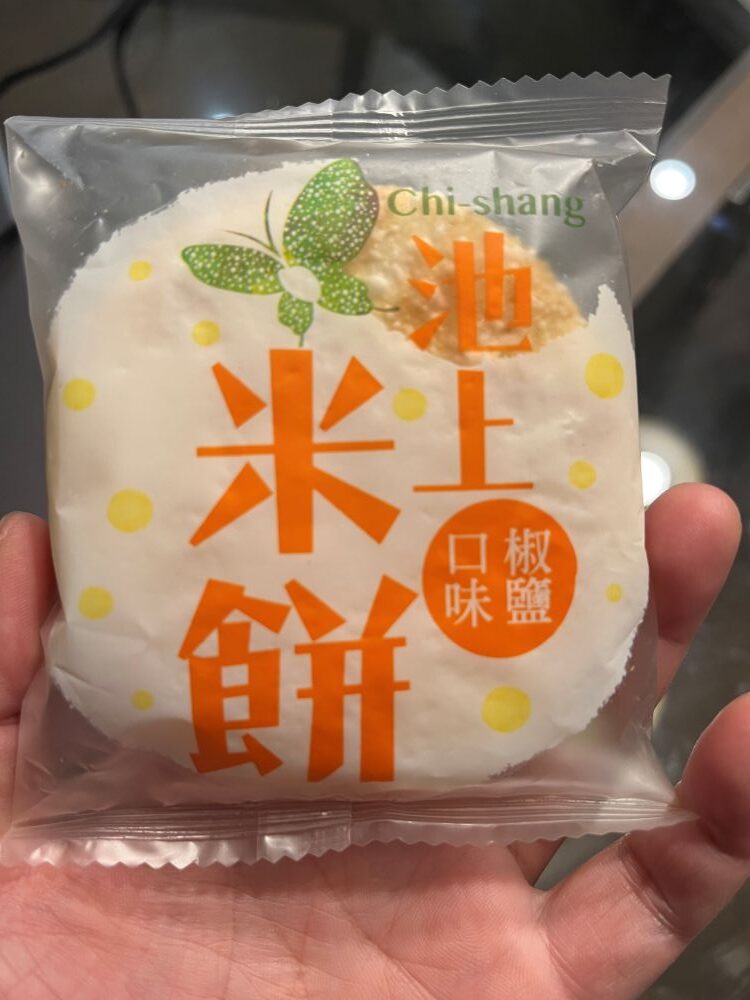
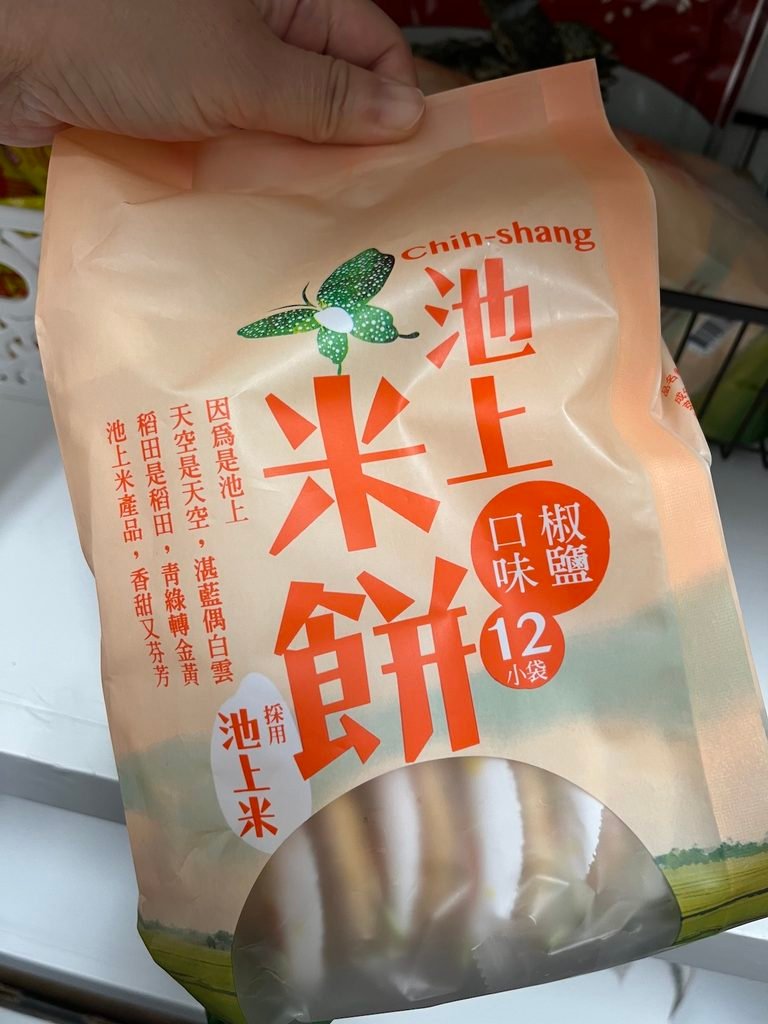
They are light, crispy, and have good balance of sweet and savory.
They’re made from rice grown in Chihshang, Taitung (台東池上鄉) in eastern Taiwan, and they have a delicate crunch with a faint rice aroma. They come in several flavors, including seaweed and quinoa, but we always buy the salt and pepper one.
These are my son’s favorite. Every summer I stock up before we fly back so he has enough to last until our next trip. Sometimes I clear out the shelf at PX Mart (全聯), and sometimes I just order a whole case online and have it delivered to our place in Taipei.
You can find them at supermarkets, souvenir shops, and convenience stores.
Prince Noodles (王子麵)
Taiwan makes a lot of interesting instant noodles, but most of them take up too much room to be worth packing. Prince Noodles is the exception, and it’s the one we bring back every year.
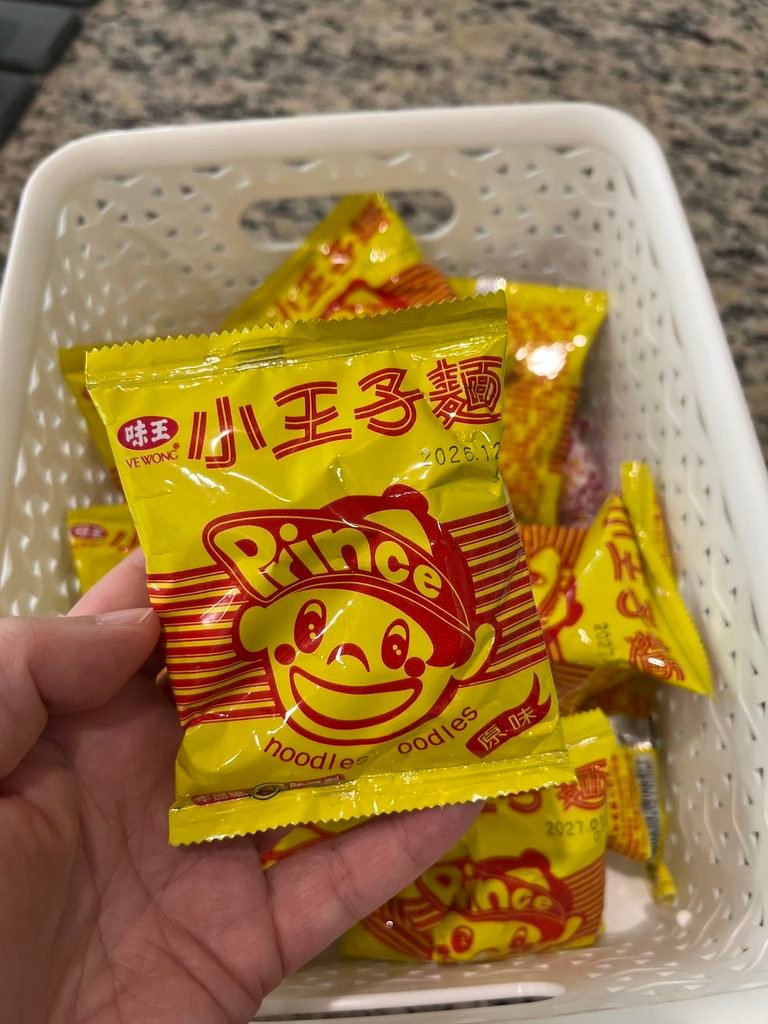
It’s a classic that’s been around for decades. The small snack-size version comes as a big bag of little individual packets. You don’t need to cook it, just eat it as snack. I usually carry a packet of it in my purse, in case I get hungry.
It travels well for an odd reason: it doesn’t matter if it gets crushed, because it’s already crumbly. I scatter the small packets around my suitcase and use them to fill gaps.
Taiwanese Tea
I’ll be upfront with you. I don’t really drink tea. So I don’t have any personal experience with the tea shops.
What I can do is tell you what the names mean, because Taiwanese tea is genuinely famous and you’ll run into these five everywhere:
- High Mountain Oolong (高山烏龍茶) – Grown in high-altitude regions like Alishan, Lishan, and Shanlinxi.
- Oriental Beauty (東方美人茶) – An oolong with a honey-like sweetness. You’ll often read that Queen Elizabeth II gave it the English name. It’s a good story, but there’s no documentary evidence for it, and the versions don’t even agree on which queen. Treat it as a legend.
- Tieguanyin (鐵觀音) – Heavily roasted, nutty, with a long finish.
- Sun Moon Lake Black Tea (日月潭紅茶) – Grown in Nantou County, malty and rich, similar to Assam.
- Dong Ding Oolong (凍頂烏龍茶) – From Lugu Township in Nantou County, and one of Taiwan’s best known teas.
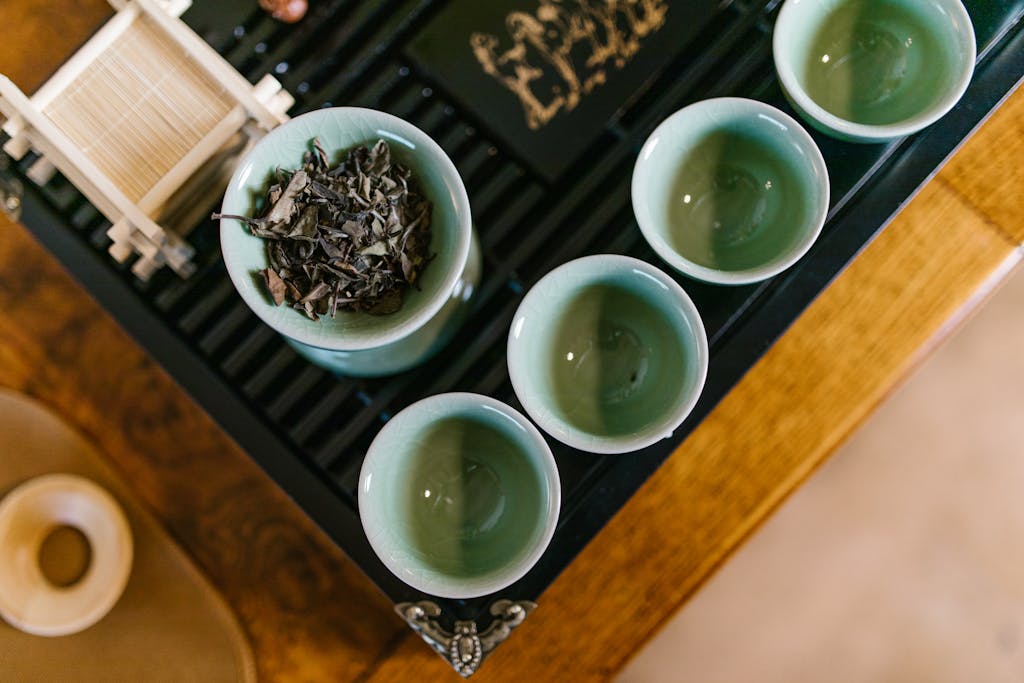
The one piece of advice I’ll give: if your trip takes you to a tea-growing area like Alishan, Sun Moon Lake, or Pinglin, buy from a farm or tea house there instead of a tourist shop. Many of them let you taste before you decide, which matters a lot more than anything I could tell you.
Alcohol
I don’t drink, so I can’t tell you how any of this tastes. What I can tell you is that two Taiwanese bottles are things you can hand to someone without explaining yourself.
Kavalan whisky (噶瑪蘭威士忌) has won a long list of international awards and is the one most visitors have heard of. If you want to make a day of it, the distillery in Yilan runs tours and tastings and sells editions you won’t find elsewhere (official website).
Kinmen Kaoliang (金門高粱酒) is distilled from sorghum (高粱) and comes from Kinmen, an island off Taiwan’s coast. It runs from 38% to 58%, so it’s strong. Taiwanese people give it as a serious gift, and that tells you where it sits.
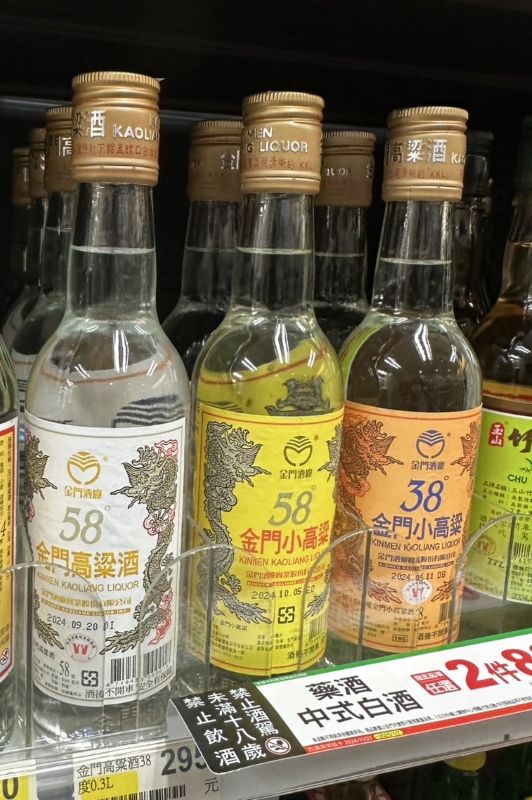
You’ll find both at liquor shops, supermarkets, and the airport duty-free shops. My suggestion is to buy at the airport on your way out. Anything you buy downtown can’t go in your carry-on, so buying at the gate saves you from checked luggage and bubble wrap. If you have a connecting flight, check that airport’s rules first, because duty-free bottles sometimes have to go through security again.
Best Non-Food Souvenirs
Gaji Bags (茄芷袋)
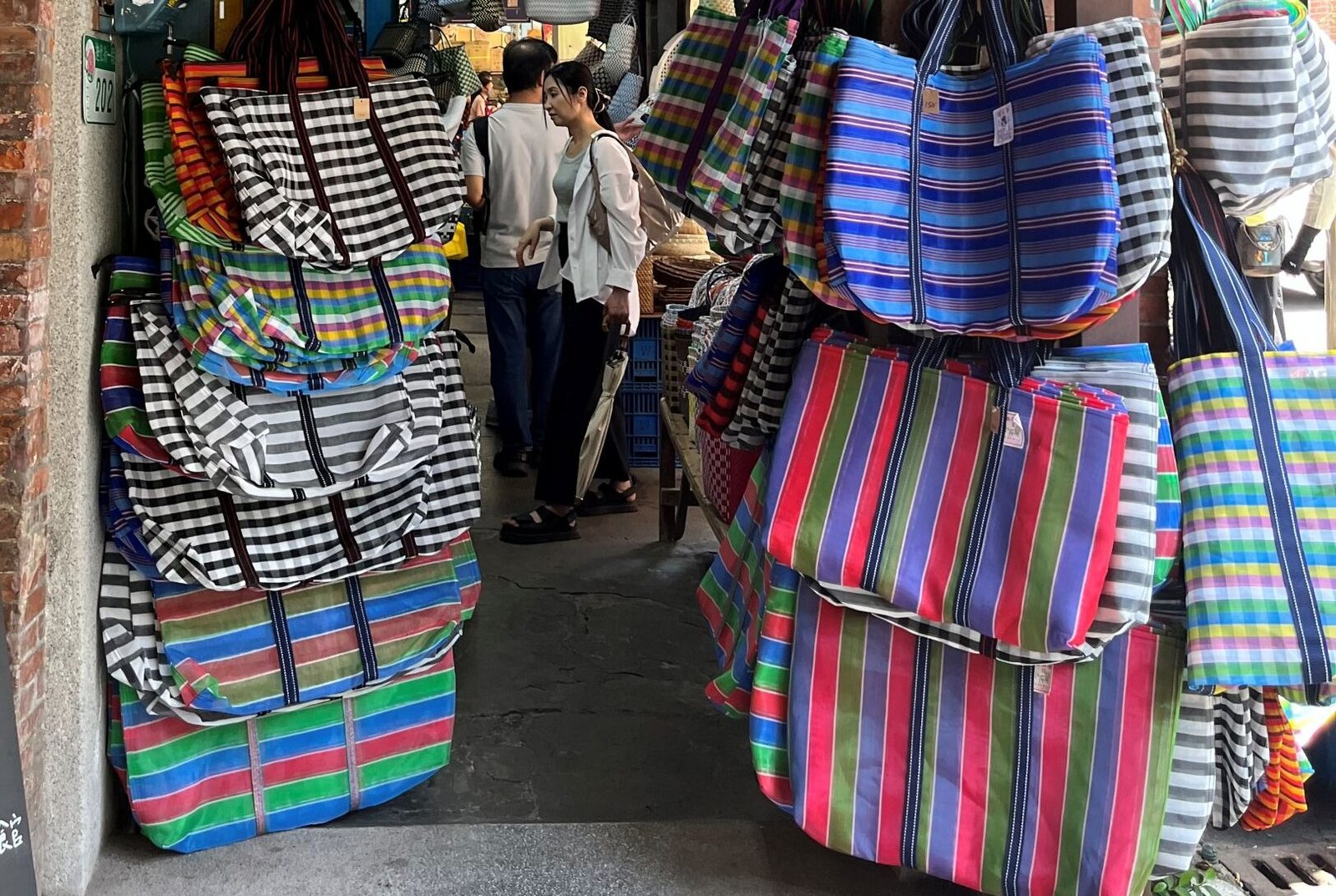
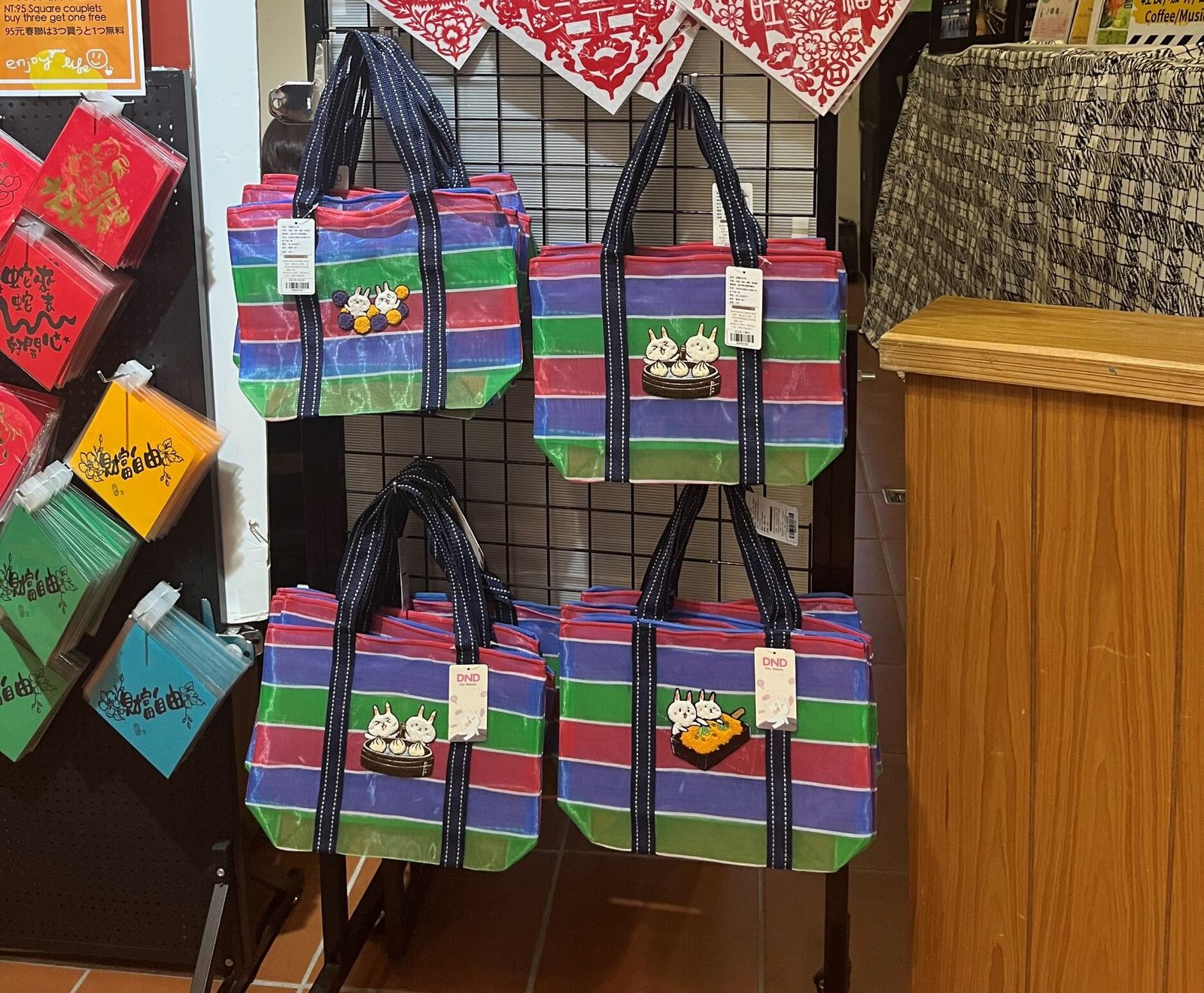
You may have already heard this one called Taiwan’s version of the LV bag. That still makes me laugh a little.
I grew up seeing these woven bags everywhere. My grandmother took one to the market. So did everybody else’s grandmother. Back then I thought they were a bit tacky. They were the opposite of something you’d want to be seen carrying.
Then a few years ago they came back, and now young people carry them on purpose. I still feel a little strange about it.
I keep thinking I should get one. Every time I look, there are so many colors, patterns, and sizes that I can’t make up my mind. They cost almost nothing, so price isn’t what stops me. And my closet already has more bags than it should, so I keep putting it off.
For a visitor though, I think it’s one of the better things you can buy. It’s light, it folds down to nothing, and it’s cheap.
The newer designer versions are in the design shops around Yongkang Street, Dihua Street, and Ximending. The plain original ones are still sold in traditional markets and hardware stores, and they cost even less.
Indigo Dyeing (藍染)
This is the only souvenir on the list that you make yourself, and it’s the one I’d recommend most.
Indigo dyeing goes back to the 17th century in Taiwan, when indigo plants arrived during the Dutch colonial period. By the Qing Dynasty the industry was thriving and handmade indigo textiles were a major export. Large-scale production is long gone, but the craft came back as an art form, and you can try it yourself.
Our family did a workshop at 貓裏客家學苑 in Miaoli. Each of us made one piece, so we came home with three, and every one turned out completely different depending on how we folded and tied the cloth.
Back in the US we had them framed. They hang in a row on our wall now.
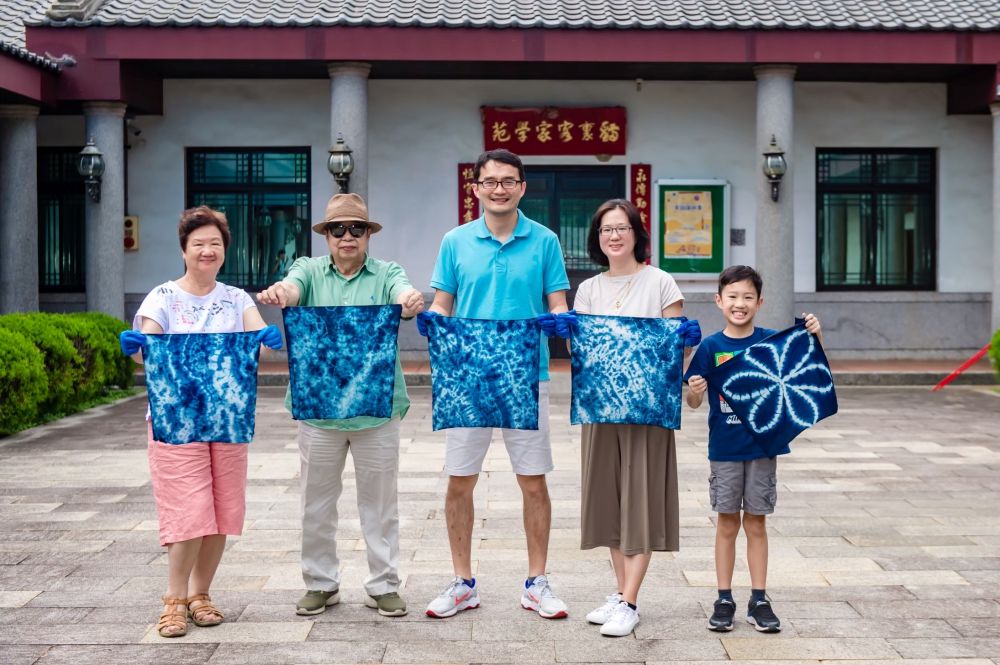
It’s also the easiest thing on this list to bring home. Cloth is light, it folds, and nothing can crush it. You take it with you the same day.
Some places to try (linked to their official sites):
- The CAN (三峽文創)
- Joye Indigo Dyeing House (卓也藍染)
- 貓裏客家學苑 – This is where we went.
Ceramics and Pottery from Yingge (鶯歌陶瓷)
Yingge District in New Taipei City is known for handmade pottery, and it’s a good place to browse if you want something with more weight to it. I’ve written an in-depth guide to Yingge if you’re thinking about going.
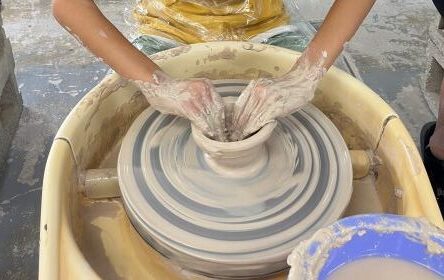
You can also make your own. I took this workshop and made a cup. My son made a plate. They sit out at home now, holding small things, and we like having them around.
One warning though, and it’s the opposite of the indigo dyeing. Ceramics are heavy and they break. Your piece also has to be fired before you can take it, so depending on the studio you may not get it the same day. If your trip is short, ask about that before you sign up, or just buy something ready-made instead.
Boba Tea Trinkets
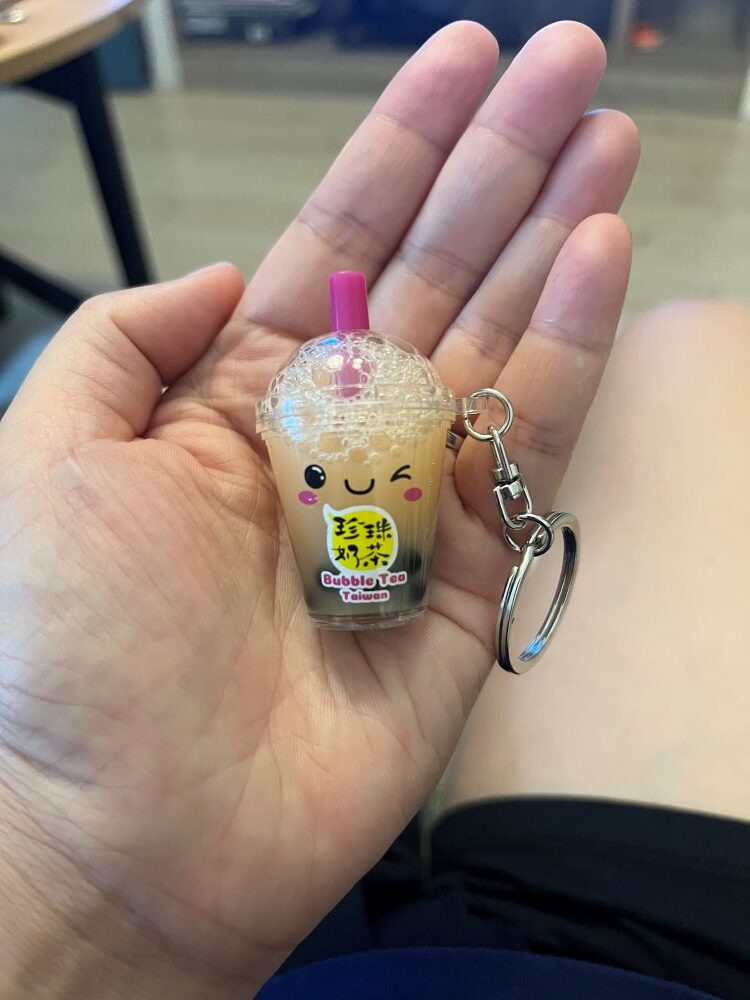
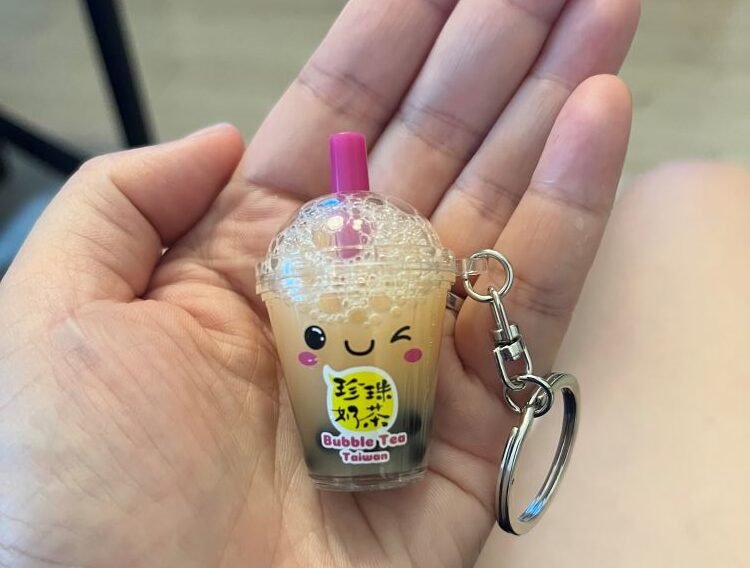
Taiwan is where boba tea started. You can’t bring the drink home, but there’s a whole category of boba-themed keychains, charms, and small toys.
My son picked this one up at a convenience store on our last trip. It’s been on his school backpack ever since, and his classmates keep asking about it.
Local Design Trinkets and Magnets
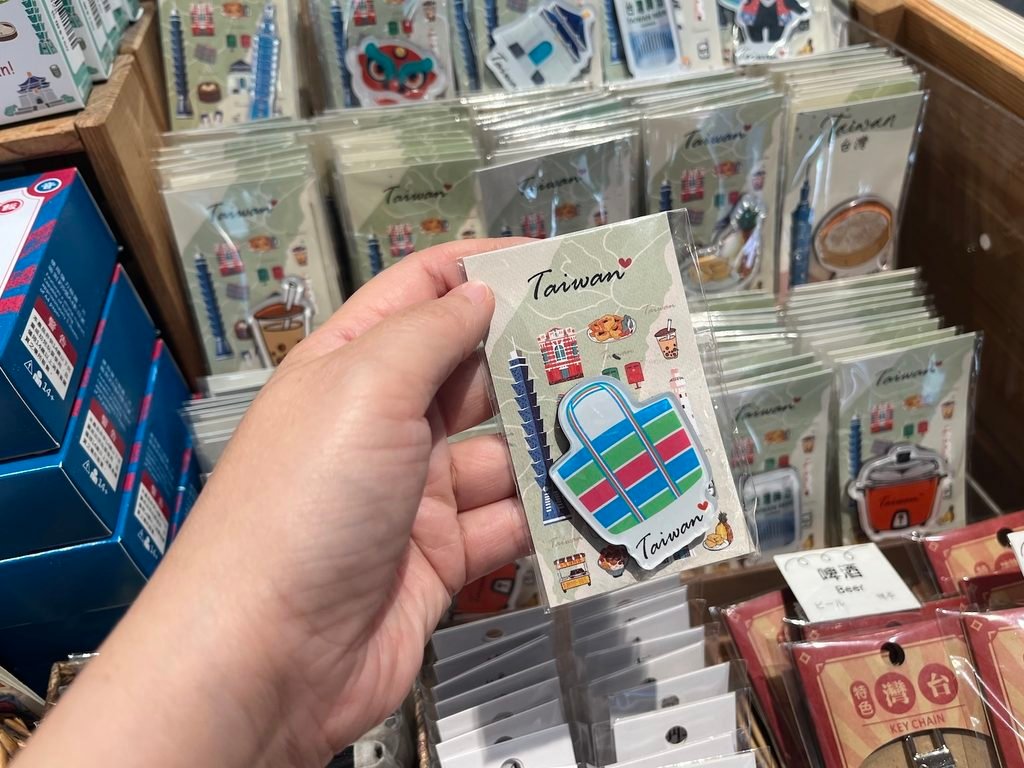
This is the category I keep buying from, because everything in it is small, cheap, and easy to pack.
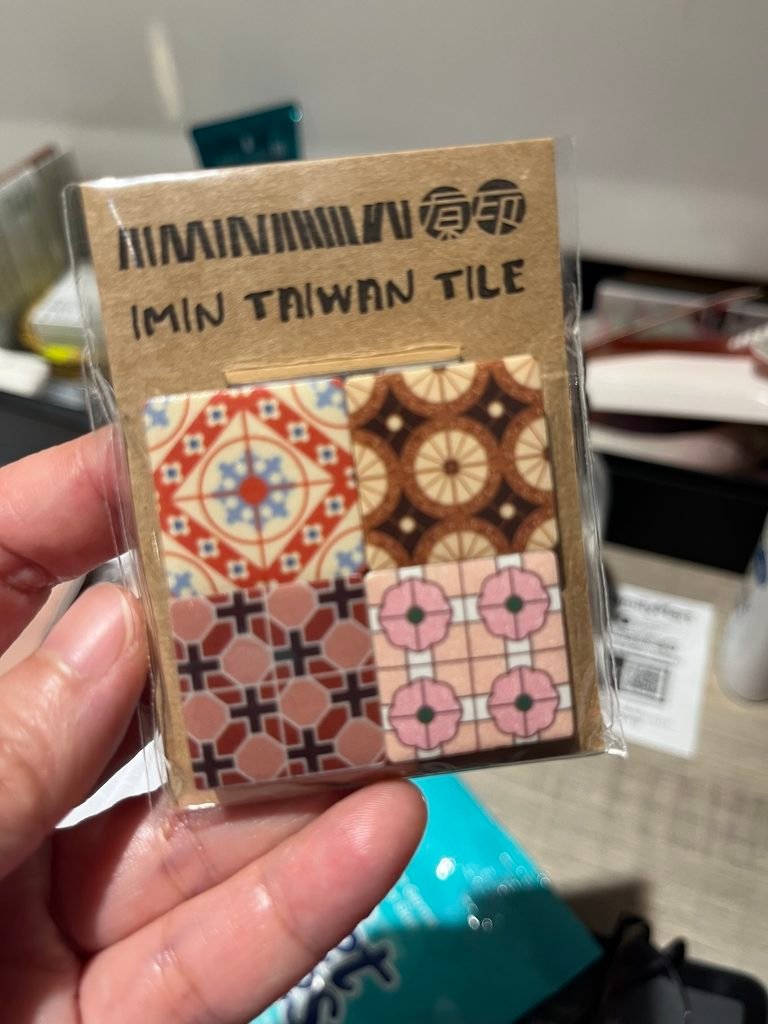
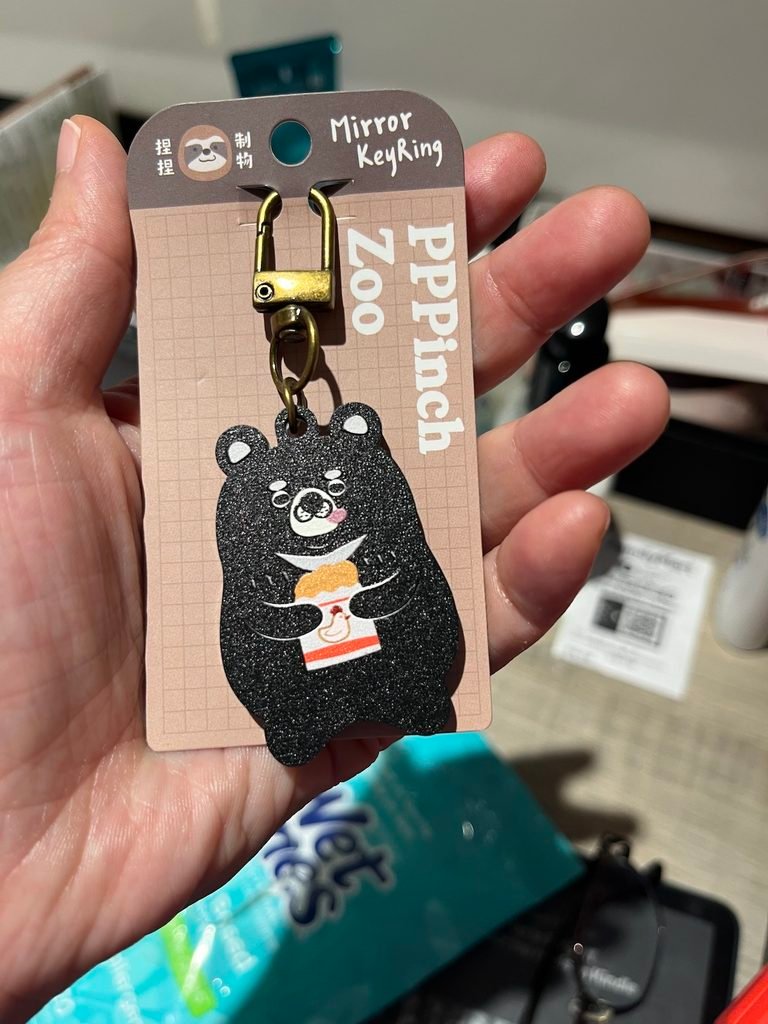
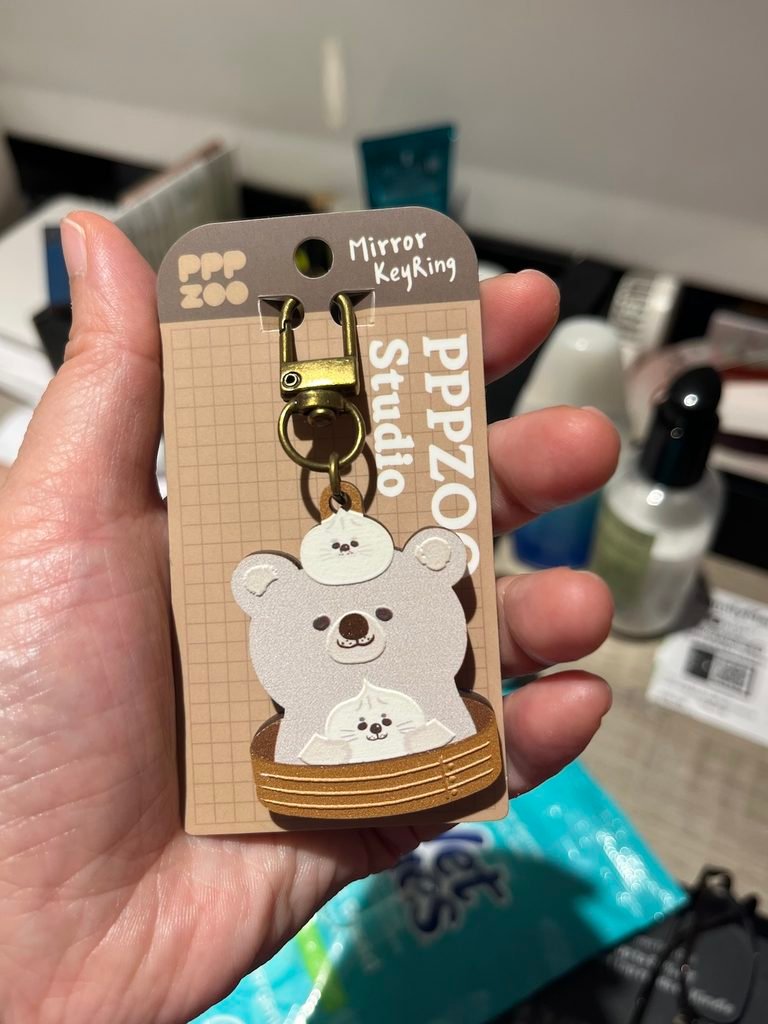
What I’ve brought home: a Formosan black bear charm, a xiaolongbao charm, and magnets printed with old Taiwanese tile patterns, the kind you see on the front of century-old houses.
You’ll find shops like this in most tourist areas, including Dihua Street and Ximending. My own favorites are the ones on Yongkang Street, which is also where I buy nougat crackers, so it’s an efficient stop.
Designed EasyCards (造型悠遊卡)
EasyCards come in all kinds of shapes and themed designs, which turns a transit card into something people collect. Plenty of locals do.
Look near the cashier counter at convenience stores. The photos below are from a display in one of them.
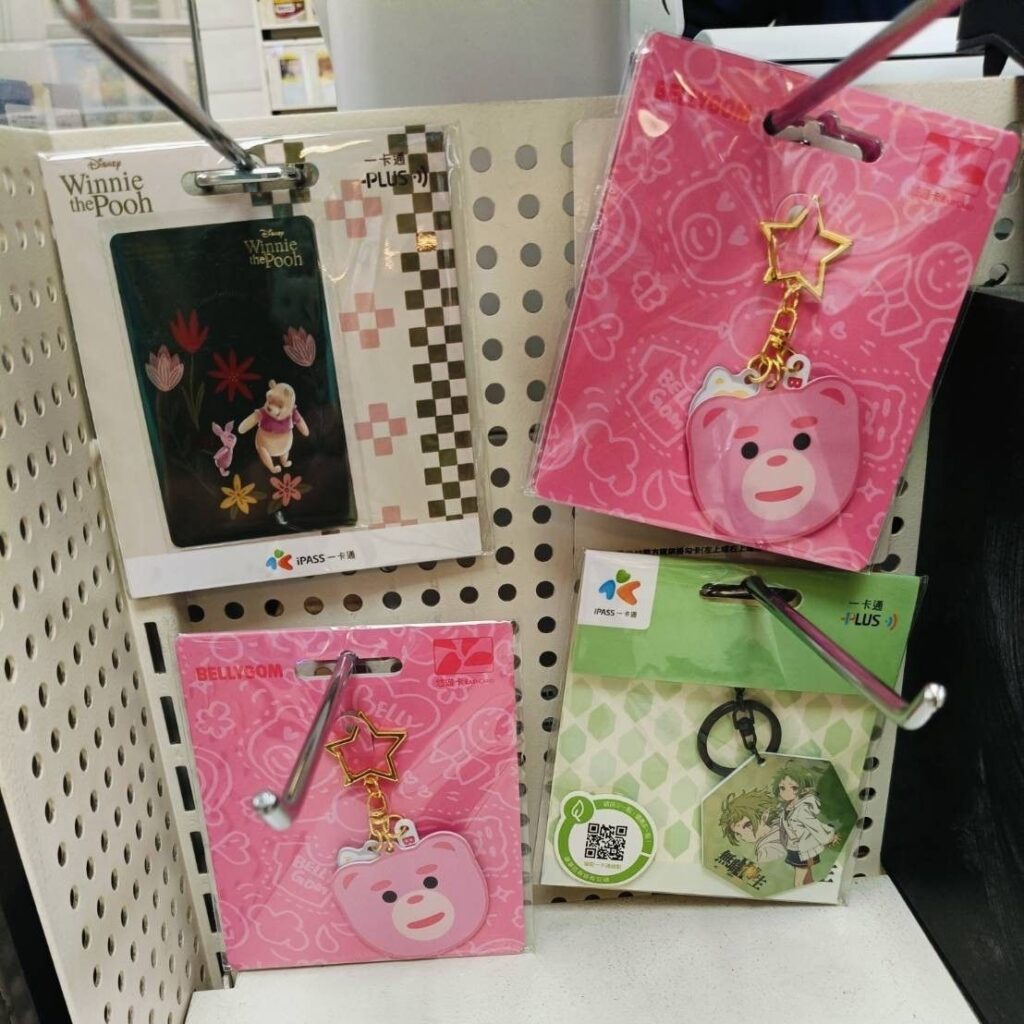

If you’re choosing one, look at the charm-style cards rather than the flat ones. My son has a peach-shaped charm that clips onto his bag, and it means he can tap through the gate without digging his wallet out. It’s a small thing, but you’ll notice it every single ride.
Performance Wear (機能衣)
Most visitors have no idea about this one. Taiwan is one of the world’s major producers of high-performance fabric.
The island used to be a hub for ordinary garment manufacturing. It shifted to technical textiles, and for decades now Taiwanese mills have been supplying the fabric that global sports and outdoor brands build their products from. There’s a reasonable chance something in your closet already came from here.
That expertise shows up in the local brands too, which sell breathable, moisture-wicking, UV-protective, and water-resistant clothing at prices that tend to surprise people. I haven’t bought from these myself, so I’m listing them as starting points rather than recommendations:
Both sell online and can ship to your hotel or a nearby convenience store for pickup. Sportswear shops and department stores carry plenty of other brands if you’d rather try things on.
Final Thoughts
That’s my list.
If you only have room for a couple of things, start with pineapple cakes and nougat crackers. Eat the sun cake while you’re still in Taiwan. Same goes for any nougat crackers that come loose in a box.
The pottery is the one I’d think hardest about. It’s heavy and it breaks, and depending on the studio you may not even get it before you fly home. The indigo cloth has none of those problems, which is part of why I keep pushing it.
Every summer I come back with a slightly different set of things, and some years I overbuy and regret it. My son’s list never changes. Rice crackers and Prince Noodles, every single time.